Native American Baby

Honoring Native American Heritage

In many indigenous communities, children are viewed as sacred beings. They are earth’s most recent inhabitants and have a close connection to the Creator.

For Native American communities, providing a strong start for their children includes enriching practices that respect and embrace their heritages, languages and cultures. These practices are the heartbeat of tribal nations. Join us in celebrating our indigenous communities and the caregivers and professionals who support them.

Join us in celebrating our indigenous communities and the caregivers and professionals who support them.

Check out our list of curated resources for early childhood professionals working with indigenous communities or looking to learn more about diversity-informed practice.

Reflections on a Journey Into Early Childhood

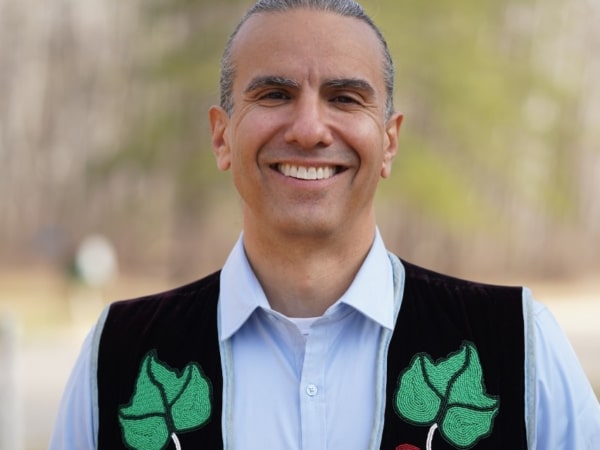
An open letter from a tribal citizen of the Lac Courte Oreilles Band of Ojibwe

Dr. Michelle Sarche, a clinical psychologist, researcher, and board member of ZERO TO THREE, reflects on the experiences that shaped her career and her lifelong commitment to promoting the wellbeing of American Indian and Alaska Native children and families. Her story is one of connection, mentorship, and the deep meaning of early childhood work.

Growth happens when we step into things that challenge us. You have to persistently do the things that feel daunting, because that’s how you learn, how you lead, and how you serve.

Culturally Grounded, Evidence-Based Tribal Home Visiting

Supporting the development of happy, healthy, and successful American Indian and Alaska Native (AIAN) children and families

ZERO TO THREE’s Tribal Home Visiting Resource Institute for Excellence (THRIVE) team strengthens the capacity of Tribal Maternal, Infant, and Early Childhood Home Visiting grantees to deliver high-quality home visiting programs in tribal communities and to build integrated early childhood systems that support American Indian and Alaska Native families.
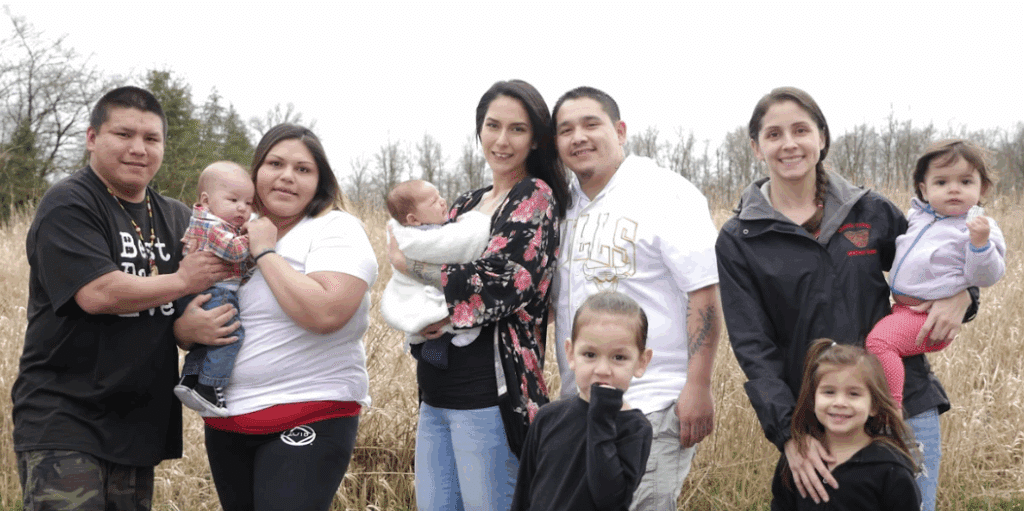
Native parents and their children smiling together

I have built such a beautiful relationship with my Nutaq nurse. She's there when I have questions about behaviors, health, stress.

Healing from the Inside Out

A New Age for Collaboration, Communty and Indigenous Home Visiting

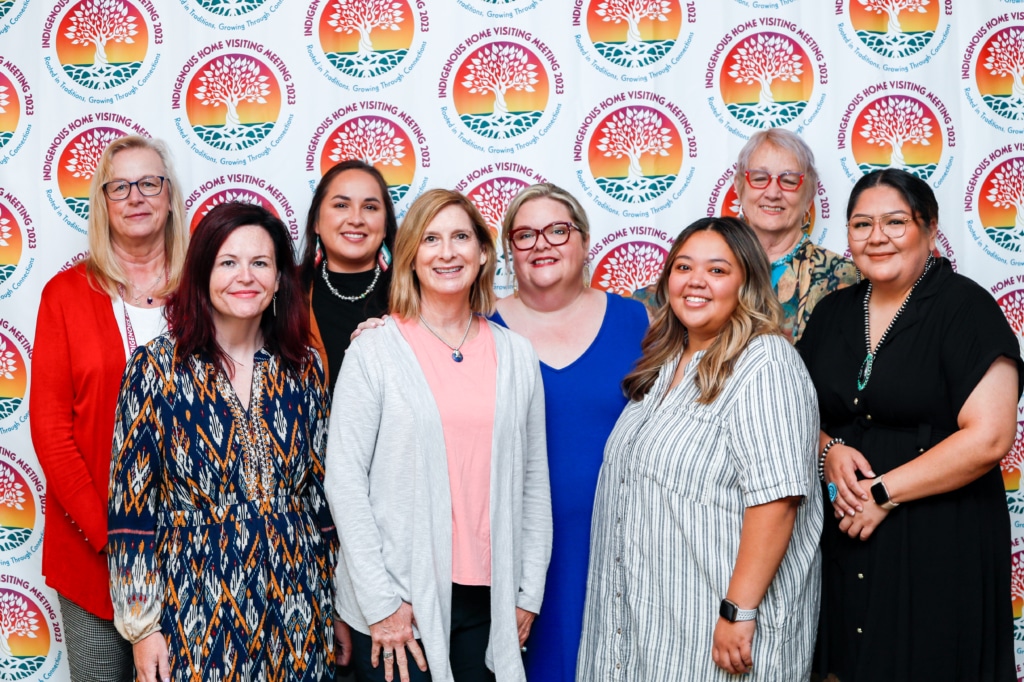
We invite you to share in this wonderful closing plenary from the Administration for Children and Families Indigenous Home Visiting Meeting.

Dr. Anton Treuer reflects on his journey to understand native heritage and culture, including during the birth of his own children, and how collaboration, community, and home visiting can help native individuals overcome adversity, heal from trauma, and equip young families for their best chances at long, healthy, happy lives.

It is possible to restore intergenerational transmission of indigenous languages and cultures. It’s happening in many ways, in many places and in many forms. It means everything.

Teachings from Home: My Journey in Home Visiting

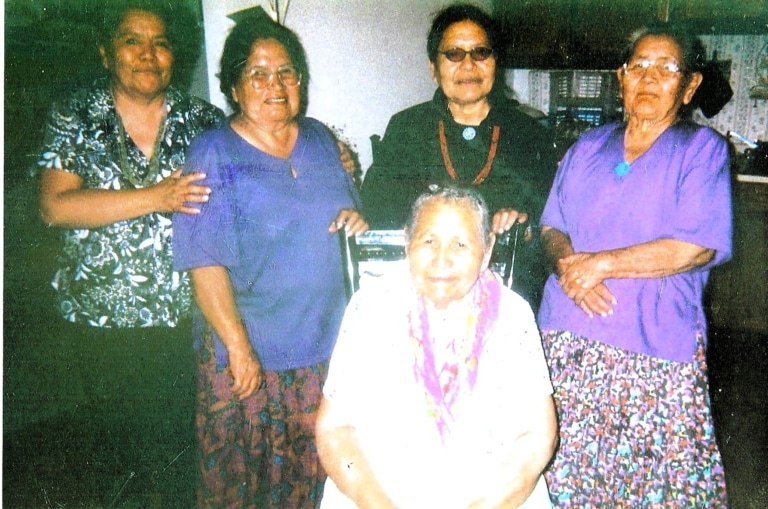
Living on the Navajo Reservation shaped Carri's identity and upbringing in significant ways

Now a member of ZERO TO THREE’s THRIVE team, Carri Chischilly reflects on how the family support she experienced growing up on the Navajo Nation Reservation inspired her journey to help other native families through home visiting services.

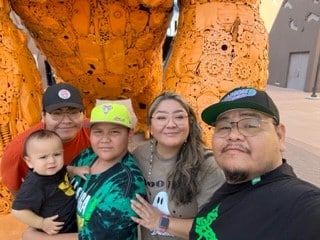
Carri with her husband and children.
Photo of Carri Chischilly's family

Growing up, we are taught to care for and give back to our community, so the home visitor position was a blessing that came across my career path.

Implementing the Safe Babies™ Approach in Tribal Communities

By partnering with the National Indian Child Welfare Association (NICWA), Safe Babies is approaching the work with cultural competence and is committed to addressing bias in the child welfare system.

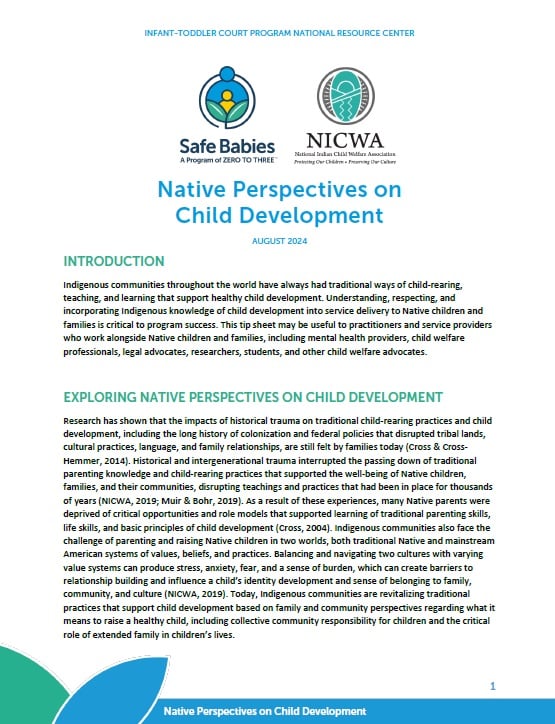
The cover page of a PDF download on native perspectives on child development

A growing body of research shows that culture is an important protective factor for Native children and youth. In recent years, an increasing number of tribal nations have decolonized their child welfare systems, refounding them based on their tribal cultures, worldviews, values, and traditional beliefs.

More Resources for Parents & Professionals

Previous
Next

Check out this comprehensive list of resources and organizations to ensure culturally responsive practice in your work with indigenous communities.

View our Baby Brain Map to learn more about early brain development.
Advertisement
Advertisement