

Quality Child Care: Essential Support for Young Children and Families
No family should pay more than they can afford for the child care they need and their baby deserves.
Child care is an essential building block in the foundation of our families’ and nation’s future.
Child care represents one of the most critical aspects of a child’s development. This multifaceted field encompasses the care, education and social-emotional development of children from infancy through the early school years.
Early learning means children begin kindergarten ready to learn and succeed. Increasing access helps more babies and toddlers, including those with delays and disabilities, get the developmental support they need.
Ensuring access to high-quality child care for families and facilitating state-of-the-art training and support for educators are some of the driving forces for our efforts at ZERO TO THREE.
Jump To:
In most states, the cost of child care exceeds the cost of college tuition.
Why It Matters
Child care is essential for supporting the developmental needs of babies and toddlers, providing peace of mind for parents and contributing to the economic stability of families and communities.
However, the high cost of out-of-home child care in America is a burden for most families, resulting in a need for child care assistance. Despite the high costs, the majority of early childhood educators are significantly underpaid for the highly-skilled work they do.
Early childhood educators, family child care providers, grandparents and other kinship caregivers all play an essential role in helping babies and toddlers learn, grow and thrive.
Supporting these caregivers with training, resources and community connections strengthens the quality of care children receive and helps ensure families have access to trusted, responsive care that meets their needs.

We spent $14,000 on childcare. It was our down payment for a house.
James, Parent
By the Numbers
When parents lack safe, high-quality child care, they either can’t work or risk leaving their children in unsafe or poor-quality settings. Neither is a good alternative. Parents exit the workforce and leave gaping holes in the economy, supply chains, and essential services. The system is fundamentally broken, and the healthy development of our children is at stake.
+50%
More than half of children under the age of 3 spend time each day cared for by someone other than a parent.
$12
The average child care provider in the US makes $12 per hour and most do not receive benefits.
820k
In 2023, approximately 820,000 were enrolled in Head Start.
56%
On average, Black families in the US spend 56 percent of their income on child care, reflecting past and present systemic racism and barriers to critical resources.
17%
Just 17 percent of qualifying families and only 4.2 percent of families with low to moderate income who could benefit actually receive child care assistance they qualify for.
54%
More than half of early childhood educators who left the field cite poor compensation as the primary reason why.
Showing Slide 1 of 6
Sources: ZERO TO THREE (2017, September 6). Infant-toddler child care talking points. Long, H. (2021, September 19). ‘The pay is absolute crap’: Child-care workers are quitting rapidly, a red flag for the economy. The Washington Post. Novoa, C. (2020, June 29). How child care disruptions hurt parents of color most. Center for American Progress. U.S. Government Accountability Office (2021, February 18). Child care: subsidy eligibility and receipt, and wait lists.
Reaching more families with proven services to support positive early development is an important policy to promote school readiness.
Studies show that children that participate in Head Start programs receive innumerable benefits. These advantages appear immediately, last a lifetime, and even have an effect on other generations.
Early Head Start is the only federal program specifically focused on the early development and learning experiences of babies and toddlers living in families with incomes below the poverty line.
When disadvantaged children receive high-quality birth-to-five education, such as Early Head Start plus Head Start, the return on investment can be as high as 13% annually.
Our Impact
ZERO TO THREE advances high-quality child care through evidence-based training, professional development and policy advocacy.
Our Critical Competencies for Early Childhood Educators courses help build a skilled early childhood workforce that supports healthy child development.
Through our Think Babies™ campaign, we also advocate for policies that expand access to affordable, high-quality child care and strengthen support for early childhood educators, helping more families give their babies the strong start they deserve.

The child care field is facing numerous challenges, including affordability and accessibility as well as underpaid and overworked educators.
At ZERO TO THREE, we are pressing for positive changes to be made in child care. We have several tools and resources to support our efforts, from robust child care training programs to our advocacy for affordable, quality care.
We work with governments and communities and constantly explore new models for funding, providing, and enhancing child care courses and other solutions.
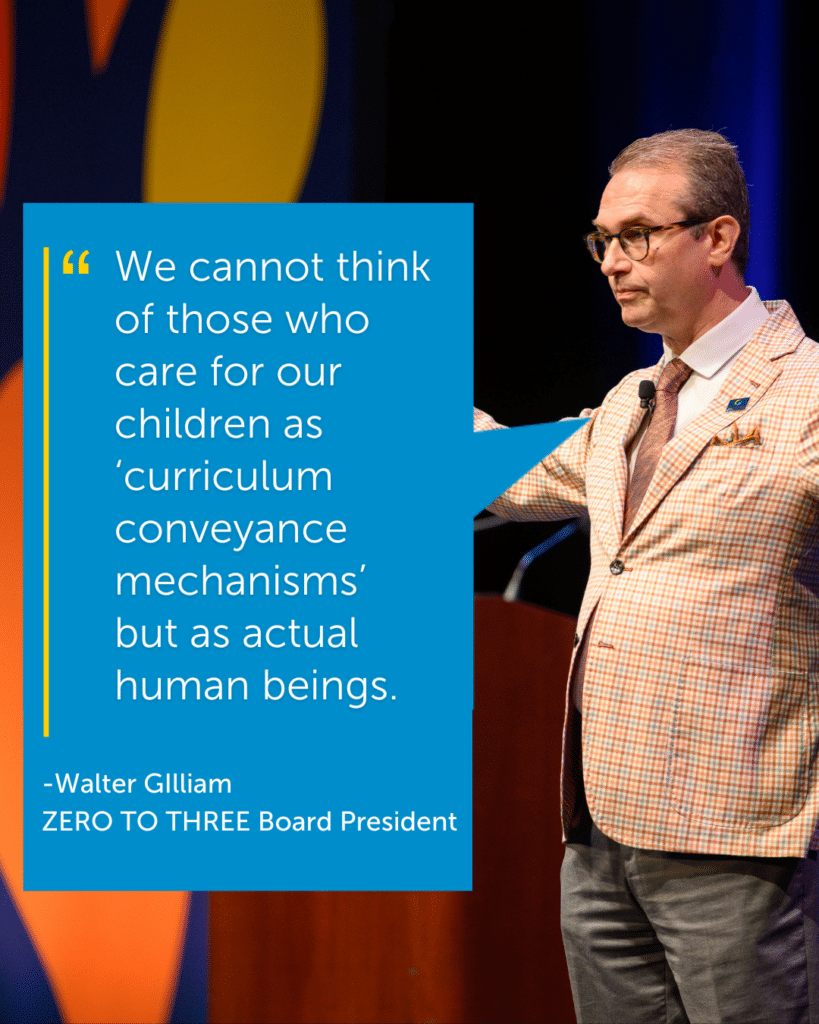

We either had to relocate or I had to leave the workforce. Opening a child care center was the only way forward for our family.
Mariah, Parent
Frequently Asked Questions
High-quality infant and toddler child care requires low staff-to-child ratios so caregivers can provide the responsive, nurturing attention young children need. Child care programs also face rising operating costs and struggle to retain staff, while many early childhood educators remain underpaid despite the critical role they play in child development.
High-quality child care helps babies and toddlers build strong relationships, explore their world through play and develop the social, emotional and cognitive skills they need to thrive. Quality programs provide safe, nurturing environments with responsive caregivers who understand child development and partner with families to support children’s growth.
Many families qualify for child care assistance through federal and state programs, including the Child Care and Development Fund (CCDF), Social Services Block Grant (SSBG) and Temporary Assistance for Needy Families (TANF), which helps make child care more affordable and accessible. That’s why the ZERO TO THREE Policy Center advocates for continuation and expansion of programs that support quality, affordable child care for working families.
During the first three years of life, a child’s brain grows faster than at any other time, creating the foundation for lifelong learning, health and well-being. Early childhood educators play a critical role in this development by building nurturing, responsive relationships that help babies and toddlers feel safe, supported and ready to learn. To help children thrive, educators need competitive compensation, supportive work environments and access to high-quality professional development.
Child care is a critical part of the care economy, which includes the systems and services that help families care for children, older adults and others who need support. When families have access to affordable, reliable child care, parents can work, businesses can retain employees and communities can thrive. Investments in child care not only support today’s workforce but also help ensure babies have the nurturing relationships and early experiences they need to grow, learn and succeed.
Help us make affordable, high-quality child care a reality for families across the country.
Unlike K-12 education, which is largely funded through public dollars, the United States places the majority of the burden for paying for child care on parents of young children, subsidized by the low wages of the early educators who provide care.
ZERO TO THREE offers a wide range of child care resources, research and publications designed to support parents, early childhood educators, child care providers and other professionals who care for and support young children.

Open Letter
Why I Traveled 2,000 Miles to Advocate for Quality, Affordable Child Care
A typical working mom struggling to find child care, Amy joined Strolling Thunder and took her story to Capitol Hill to encourage Congress to Think Babies.

Journal
Guardians in the Nursery: The Role of Early Childhood Educators in Fostering Infant and Young Children’s Positive Mental Health
Get Updates
Join us in securing a bright future for young children.
Get updates on our new resources to help parents and professionals support early childhood development and quality child care.
