How Babies Learn From Watching and Doing
Key Takeaways
Babies learn by doing. Their own movement and hands-on experiences help them understand what other people are doing.
Motor development matters for more than physical skills. Both fine and gross motor experiences support thinking and social understanding.
Everyday moments count. Simple routines like feeding, play, and reaching for objects are powerful opportunities for brain development.
A new study reveals how infants use their own motor skills to make sense of what they see others do.
At ZERO TO THREE, we often say that babies are scientists. They watch, test, and build understanding from everyday interactions. New research from the University of Washington’s Institute for Learning and Brain Sciences adds to what we know about how that learning happens.
The study shows that by 12 months, babies are not just passively watching adults act on the world. They are using their own motor experiences, like grasping, reaching, and handling objects, to make sense of what they see others do.
About the research
I-LABS visiting scientist Dr. Áine Ní Choisdealbha, in collaboration with I-LABS co-director and former ZERO TO THREE Board Member Dr. Andrew Meltzoff, conducted research on babies’ understanding of others’ motor actions.
In the study, infants watched an adult reach for objects using different types of grasps, while their own hands were either free or gently constrained. Researchers tracked where babies looked to see if they anticipated the adult’s goal. When babies’ hand movements were limited, it changed how they interpreted the action, especially for those with stronger fine motor skills. This suggests that infants use their own movement experiences to understand what others are doing.
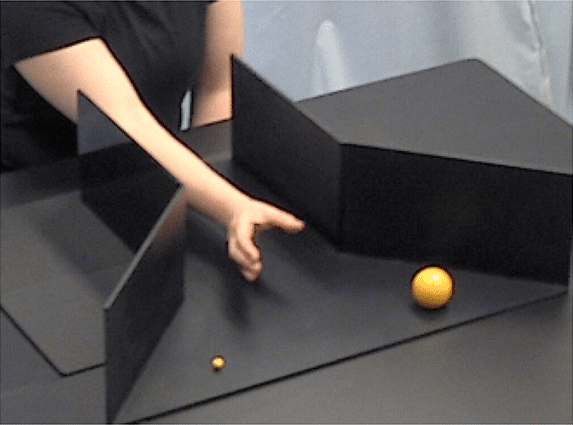
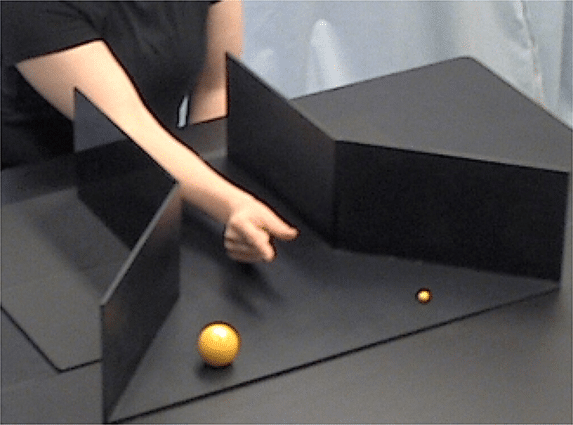
The study’s findings reveal key insights for daily caregiving and program design:
Babies understand others through their own bodies
Infants with stronger fine motor skills were more affected when researchers gently prevented them from forming a precision grip. When their hands were constrained, these babies were less likely to anticipate the adult’s goal correctly.
This suggests that babies use their own motor experience, especially emerging skills like the pincer grasp, to interpret others’ actions.
What this means for daily interaction:
- When a baby practices picking up small objects, they are not just building coordination.
- They are building the neural and cognitive foundations for understanding other people’s intentions.
- Everyday experiences such as self feeding, stacking blocks and grasping cereal pieces are also social cognitive learning moments.
Motor development and social understanding are deeply intertwined.
Hands-on experience shapes social learning
The effect was strongest when adults used a precision grip. This is a more advanced fine motor action. Babies who had mastered similar skills were especially sensitive to disruptions.
This tells us something important about how development builds over time. As babies gain new skills, they also become better at understanding the actions of others.
Implications for families and providers:
- Give babies frequent opportunities to handle objects of different sizes and textures.
- Slow down your own actions so babies can see how your hand shapes match what you are about to pick up.
- Narrate action. For example, say, “I am using my fingers to pick up this tiny piece.” This supports integration of motor, language and social processing.
When babies see and do, learning multiplies.
Programs supporting babies must integrate movement and relationships
Too often, we separate areas of development. Motor skills go in one category, social emotional development in another.
This research is a reminder that these areas are closely connected.
- Fine motor development supports social cognition.
- Action experience helps babies understand others’ goals.
- Learning is a physical activity just as much as it is a mental process.
For early childhood programs and pediatric settings, this suggests:
- Developmental screening should attend closely to fine motor skills, not just as mechanical milestones but as foundations for learning.
- Infant classrooms should include intentional opportunities for grasping, manipulating, and exploring objects safely.
- Parent education should emphasize that play with your hands is brain building.
- Early intervention services should consider how motor delays may influence broader social cognitive experiences.
Access and opportunity
Access to safe, developmentally appropriate materials and space to explore is not the same for every family. Some families may have fewer resources, less time, or more stress, which can limit opportunities for hands on play.
Programs serving infants can help by:
- Providing access to simple, engaging materials for exploration
- Showing caregivers how to use everyday household items safely for motor play
- Recognizing that supporting movement and exploration is also supporting learning and development
Key takeaway
This study gives clear evidence that babies use their own bodies to understand other people. When their ability to move was limited, it changed how they made sense of what they saw.
Supporting both gross and fine motor development is not just about physical milestones. It helps build the brain systems babies use to understand others and navigate their social world.
Every snack, every toy and every shared moment offers an opportunity for learning.

Next Up
Go to Next Resource
resource
A Year of PlayBrowse fun seasonal activities by month to find play activities that promote your child's development all year.