
Home/Resources/Infant and Early Childhood Mental Health/Parenting Through Crisis: Supporting Children Two to Five Through Racism, Violence and Family Separation
Parenting Through Crisis: Supporting Children Two to Five Through Racism, Violence and Family Separation
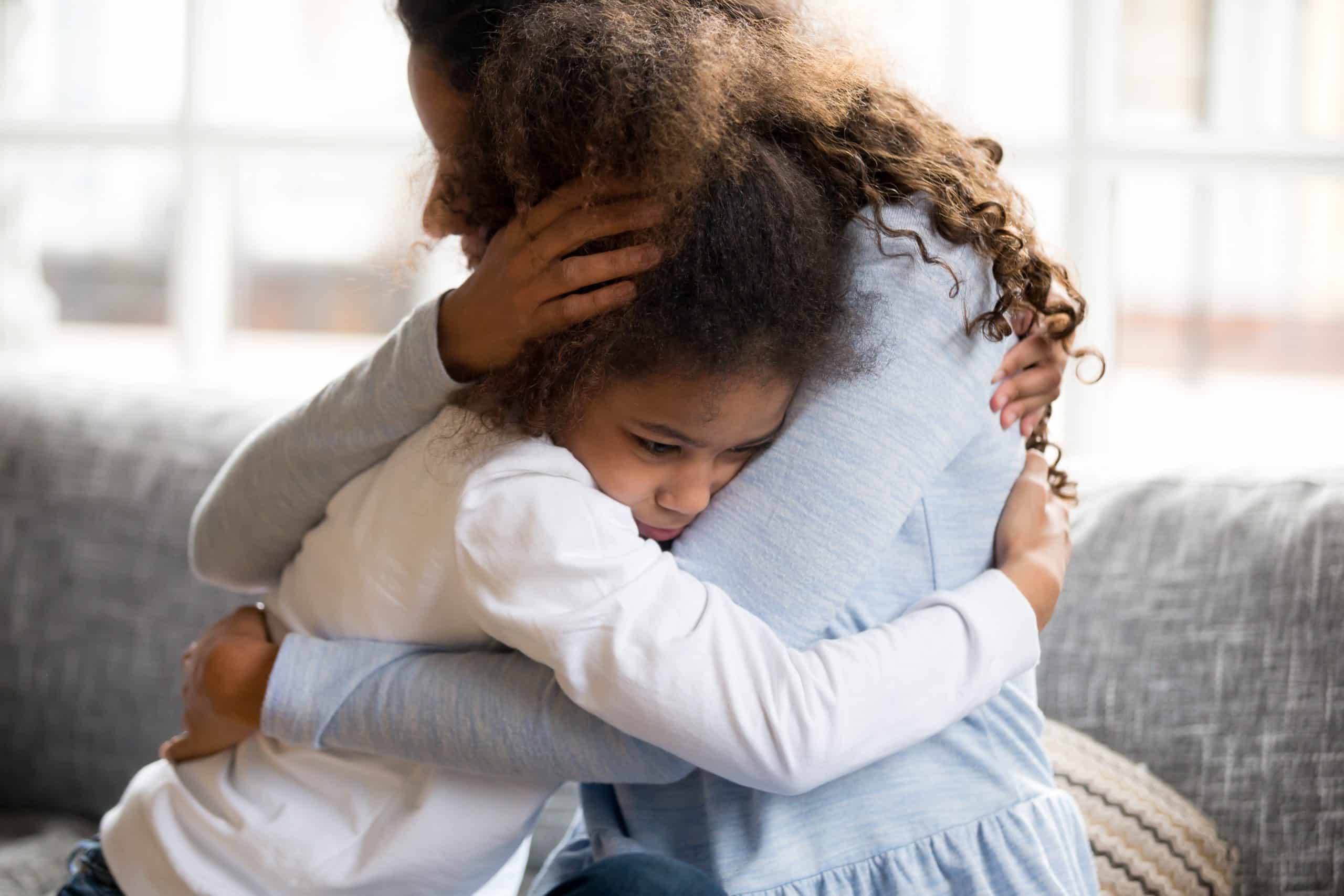

This resource provides thoughts and guidelines for talking about the complex issues of racism and equality in age-appropriate ways with children aged two to five years of age.
Television and radio news, social media, and neighborhood conversations are often dominated by violence, conflict, and social injustice. These can include racism, police violence, and, increasingly, immigration enforcement and deportations. Some children are also seeing or hearing about families being separated at airports or borders, or worrying that someone they love may be taken away. Adults across the nation continue to try to make sense of what is happening, and parents face the added challenge of figuring out how to talk about these complex and painful issues with children.
While we hope that children don’t fully understand what’s going on, even very young children pick up on our emotions, especially fear, sadness, and anger. They look to adults to help them make sense of their world.
This resource provides thoughts and guidelines for talking about these complex issues of racism and equity in age-appropriate ways with children aged two to five years of age. These are difficult and uncomfortable discussions for which there is no recipe. You will know how to adapt these ideas in a way that reflects your unique situation and the individual needs of your child. You might also find it helpful to seek input from your family and trusted sources like religious and other community leaders.
Guidelines for Talking about Racism and Violence
1) Limit access to media images and discussions about frightening events. Young children are taking in everything they see and hear, and are working to understand what it all means. They are careful observers, closely attuned to and affected by the events happening around them. But, between ages two and five, children lack the reasoning skills to make sense of complex issues. Parents have an important role in helping young children understand, manage and process what they have seen and feel. By limiting your child’s access to screens and keeping them away from adult conversations (including your own very natural worries about your child’s safety), you can protect her from scary events that she has no way of understanding yet.
2) Stay calm when answering, as hard as that may be. This can lessen children’s fear and help them to feel safe. There will naturally be times when you just can’t be totally calm. If you are upset, you can explain in simple language why: “I’m crying because I see that man is hurt. I feel so sad for him and his family. I’m sad and that’s why I’m crying.”
Children are very sensitive and know when there are topics mommy or daddy don’t want to discuss. Even babies as young as 3-5 months old can sense if you are upset or sad! So, as much as you can, try not to expose young children (even babies) to your anxiety.
3) Answer your child’s questions using simple language that they understand. Let your child know that he can come to you with any questions he has and that you are not afraid of talking about difficult issues. This makes it more likely children will turn to you as a resource, and not struggle alone with their questions.
If children ask questions about events they have seen or heard adults talk about, parents can provide short answers responding to the child’s specific question. For example, a child might ask: “Why is he hitting that man?” You can answer: “He is afraid of him and angry, and has lost control. He is hurting the man and that is not ok.” If they ask, “Why is that boy crying?”, you might say, “He had to say goodbye to someone he loves. That’s really hard and sad.” Then pause and wait to see if your child has another question.
If your child stops asking questions, then stop providing details—even if you haven’t fully explained the situation. Children decide what and how much they can take in at a given time.
Following your child’s lead is a good strategy since it gives you information about what your child is thinking about, worried about, and what he is trying to understand.
4) Tailor how you talk with your child based on his age and stage of development. When young children witness events that involve people that “look like me”, these events command great attention and are meaningful to young children. It is natural for them to have questions. Depending on what your child asks and her level of understanding, she may be ready to talk about differences, equality and racism in simple, age-appropriate ways. For example, between ages four and five, children understand the concept of fairness more than ever before. For preschoolers, this means that discussions about racism can be framed as unfair behavior because people see differences in skin color as better or worse. Preschoolers also have a growing understanding of fairness. You can say things like: “Sometimes people are treated unfairly because of how they look or where they’re from. That’s not right, and many people are working hard to change it.” Explaining these ideas to your child is a starting point. Sharing storybooks on the topic is a good idea as well.
Ideas for Answering Difficult Questions
Here are some ideas for how to approach challenging and complex topics about racism, safety, and police violence are below—although it’s important to modify messages for your individual child’s age and stage.
- Are police officers good guys or bad guys?
The job of police officers is to protect people. Police officers are just people. And there are some people who are good and kind, and some people who are not. Some police officers are good, helpful men and women. And some are not. But I believe that most police officers want to keep us safe (if you do believe this). - Why are people being mean and hurting others?
These people don’t like anyone who is different from them. They only like people who look like them. And they want everyone to think the same way they do. It can feel sad and scary to see them being so mean. I’m glad that so many kind and caring people are saying, “Hey, it’s not ok to be mean and hurtful to others.”- If your child has seen footage of people being injured and asks about it: Sometimes people get so stressed that they do things they should not do. It is never okay to hurt people because we disagree with them. The person who was hurt has gone to the doctor for help.
- What is going to happen?
Many good people are really upset about this. I don’t know what is going to happen, but we’re together. I love you and I will keep you safe. - Is Daddy safe? Is Mommy safe?
Grown-ups can take care of themselves and keep themselves safe. You don’t have to worry. Mommy/Daddy always try to be safe in everything we do. Remember how we always look both ways before we cross the street? That is one way we stay safe. And there are many other ways that grown-ups stay safe too. - Am I safe?
Mommy/Daddy will keep you safe. That is our job. Your job is to be a kid and have fun. We love you and we will keep you safe. There are many kind people, neighbors, teachers, and doctors who are helping too. - Police Violence:
Some police officers see an African-American person and think they are going to make trouble because of their skin color. That is wrong and there are many people trying to change that. The job of a police officer is to keep all people safe, no matter what their skin color is. - Why are people being taken away?
Sometimes, the people who make the rules think someone doesn’t belong here because they came from another country. But many families come here to be safe and have a better life. It’s not okay to take people away from their families. Lots of people are working to change this so families can stay together. - Could this happen to us?
That’s a really big question. I understand why you might worry. In our family, we’re doing everything we can to stay safe and together. And there are helpers around us who care and want to protect all families. - [If your child is looking for additional information:] Sometimes people get so stressed that they do things they should not do. [Consider giving an example that your child might be able to relate to: Remember how I yelled when I lost my wallet?] That happens to police officers too and sometimes it means they act badly and are too rough and hurt people.
If you don’t know the answer to your child’s question, that’s okay. These are complex issues. It builds your child’s trust in you when you are open about not always knowing the answer.
Your child may be upset or confused following these challenging discussions. Watch for these signs and respond with extra support, hugs, and time together so that your child feels secure. Point out positive, supportive members of her community (family members, religious leaders, teachers, home visitors, physicians and others) who also care for and nurture your child. Let children know they have a network of people who are there for them.
How to Help Your Child Respond to Traumatic or Scary Experiences
If your young child is a witness to violence or has seen his/her caregiver in tense or frightening interactions with the police or others, watch for behaviors like:
- Increased clinginess, crying, and whining
- Greater fear of separation from parents or primary guardian
- Increase in aggressive behavior
- More withdrawn and harder to engage
- Play that acts out scary events
- Changes in sleeping and eating patterns
- More easily frustrated and harder to comfort
- A return to earlier behaviors, like frequent night-time wakings, toileting accidents, or thumb sucking
These are signs that a child is struggling with making sense of a scary or traumatic experience and needs additional support. Reach out to your child’s health care provider or to a counselor with experience with young children to plan how to move forward.
What You Can Do
- Create an environment of safety and consistency. Children who have been exposed to traumatic images or experiences benefit from an environment that is safe and predictable. Regular daily routines (like at mealtime, bath-time, hair-combing, and bed-time) help children trust and anticipate what will come next. Remember that these routines are as important to babies as they are for older children for feeling safe and secure. Maintaining a child’s school or child care attendance is also helpful, since this is a familiar routine that offers a sense of consistency and normalcy. If you can, try to limit changes (like switching preschool/child care providers) during this time. For children having a hard time with transitions, offer a comfort object like a special blanket or stuffed animal, or even a favorite action figure to hold.
- Harness the power of positive touch. If your child is having a hard time, offer extra cuddles or add a massage to your child’s daily bedtime routine. Deep pressure touch can help some children feel more ‘together’ and regulated.
- Build children up. Point out your child’s strengths and abilities. Give him opportunities to experience successes and achievements. Celebrate these milestones together. A strong sense of self and family begins with your child’s relationship with you.
- Use the daily routine of combing hair to connect with your young child. As a parent you can make this routine a relaxed, predictable time to talk, touch, and listen to your child. Sitting on your lap or snugly between your legs allows your baby or young child to be physically connected to you as you carry out this routine. The soothing and repetitive gentle hair-brushing of a boy or girl communicates warmth, caring, and a sense of security. Allowing your child to participate in the task (choosing bows or the number of braids) also reinforces a sense of control.
- Tell the story of your family. Use stories to communicate the strength, resilience, courage, humor, and intelligence of your family members. You can also highlight different themes like safety, courage, and adults providing protection. Storytelling is an ideal way to communicate your values, rich heritage, and traditions, and build a sense of family and cultural identity and pride.
- Make time for laughter and fun. Let your child see you laugh out loud while telling a story or going about your daily routines. Laugh together as a family. At the same time, be honest with your emotions. If the current tragedies are triggering memories of your own losses, be mindful of your feelings and seek support for yourself.
Protecting Children While We Work for Social Justice
As our country grapples with the complex issues of race and violence, you have the ability to build a safe haven of love, joy, hope and protection within the relationship you develop with your child. Children dream, children play, and children have hope—because of all you do.
Next Up
Go to Next ResourceCelebrating Differences: Antiracist Parenting Right from the Start
Parents wonder how to raise children who will stand up against racism. Read more about antiracist parenting and celebrating differences.
