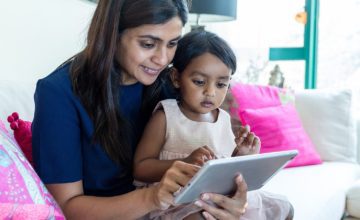

It is natural for today’s parents and caregivers to wonder about the role screens play in the lives of the babies and toddlers they love. Because ultimately, babies today are born into a world where screens and human interaction are often seamlessly interwoven.
Screen Sense—developed in partnership with leading researchers in the field of media and young children—describes what is known at this time about the effect of screen media on young children’s learning and development. It’s a useful tool in guiding parents and professionals in making mindful, informed decisions about screen media use with children from zero to 3—so that if they choose to make screen media a part of children’s lives, they can do it in a way that harnesses the potential of technology to enhance learning and development.
Key Takeaways:
- Media impact depends on content, context, and the child
The effects of media are not determined by screen time alone. What children watch, how they engage with it, and their individual developmental stage all shape outcomes. High-quality, age-appropriate content used with adult support is more beneficial than passive or inappropriate viewing. - Young children learn best through real-life interaction
Infants and toddlers have difficulty applying what they see on screens to the real world. They learn most effectively through responsive, back-and-forth interactions with caregivers. Media cannot replace these relationships as the foundation of early brain development. - Caregiver involvement is essential
Adults play a key role in shaping how media affects young children. Co-viewing, talking about content, and connecting it to real life improves learning. In contrast, adult distraction by devices can disrupt important interactions and negatively affect development.