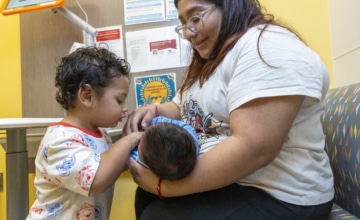
An essential guide to infant and toddler mental health diagnosis for infants and young children.
We proudly offer:
Official DC:0–5™ Training: Expert-led training to support children’s mental health and development.
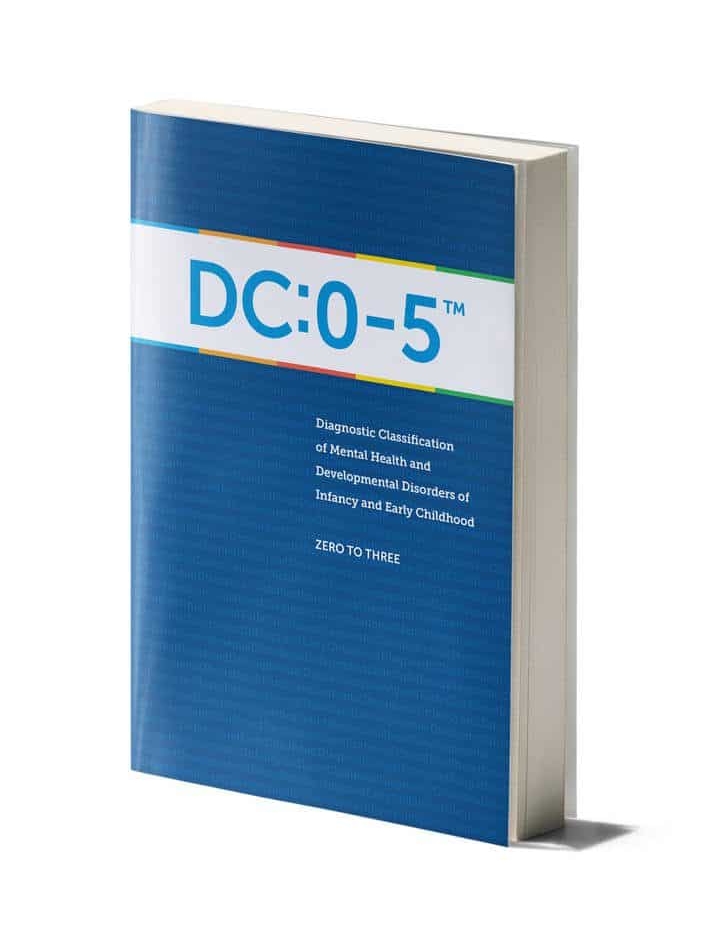
DC:0–5™ Diagnostic Classification: The essential tool for diagnosing mental health and developmental disorders in young children.
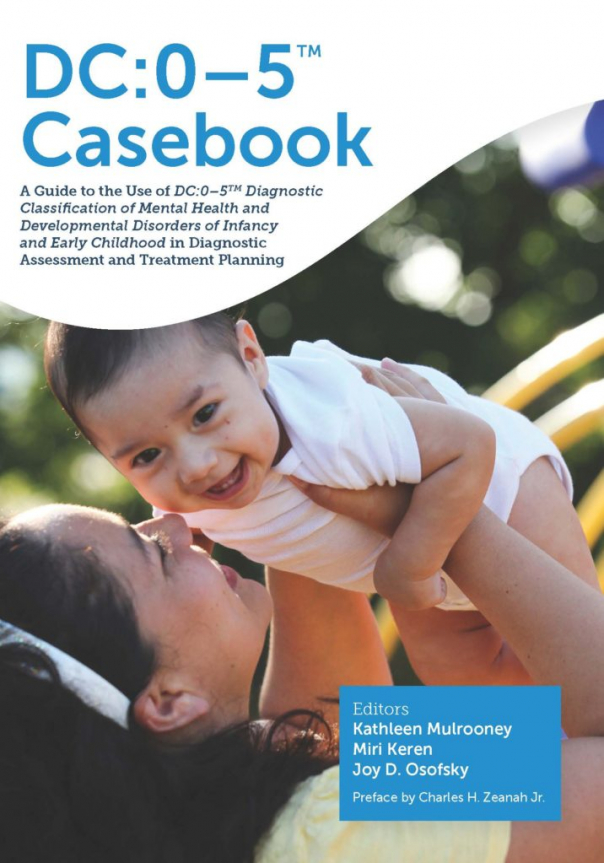
DC:0–5™ Casebook: Practical case studies to apply diagnostic standards with confidence.
Infant and Early Childhood Mental Health (IECMH) Trainings: Explore foundations of infant and early childhood mental health, including attachment, brain development, trauma-informed and relationship-based practice, reflective supervision, developmental assessment and strategies to support young children and families.
DC:0–5™ Manual
This guide is the first system for diagnosing mental health and developmental disorders in infants and toddlers.
It quickly became an essential resource for mental health clinicians, counselors, doctors, early interventionists, educators, and researchers. ZERO TO THREE is the only official source of training for DC:0–5.
ZERO TO THREE published its groundbreaking manual, DC:0–3 Diagnostic Classification of Mental Health and Developmental Disorders of Infancy and Early Childhood
DC:0–5™ Diagnostic Classification of Mental Health and Developmental Disorders of Infancy and Early Childhood captures new findings relevant to diagnosis in young children and addresses unresolved issues in the field
Discrete numerical coding provides consistency among various disorder lists and can prevent misunderstanding when translating diagnoses into other languages
Criteria extended to younger ages when appropriate, including, in some cases, to the first year of life
Introduces discussion of several new disorders, including:
Relationship-Specific Disorder of Early Childhood
Dysregulated Anger and Aggression Disorder of Early Childhood
Strengthen your ability to assess early childhood mental health with confidence
DC:0–5™: Diagnostic Classification of Mental Health and Developmental Disorders of Infancy and Early Childhood captures the latest scientific findings and clinical research on infant and early childhood mental health.
Our IECMH team trainings provide a deep exploration of infant and early childhood mental health, equipping professionals with research-informed, relationship-based strategies to support healthy development. From examining the foundations of IECMH to trauma-informed practice, reflective supervision, and these courses strengthen relationships and promote resilience for young children and their families.
Contact us to learn more about infant mental health trainings for your team and customized packages that meet your specific needs.
Featuring over 15 case studies jam-packed with practical tips to support your work with young children and their families.
The casebook is a compilation of case studies as a companion volume to DC:0–5™: Diagnostic Classification of Mental Health and Developmental Disorders of Infancy and Early Childhood (DC:0–5™; ZERO TO THREE, 2016, 2021). It is designed to strengthen understanding of clinical disorders in infancy and early childhood, and to help infant mental health clinicians better understand the application of the multiaxial framework and culturally sensitive/relational approach to diagnosis that is fundamental to DC:0–5™.
Connect With IECMH Professionals at Our Next Conference
Don't miss the next LEARN Conference where early childhood professionals from across disciplines, geographies and backgrounds will come together to strengthen their practice.