Helping Community Health Centers Enhance Early Childhood Developmental Services: Highlights From a Needs Assessment Survey
This piece highlights results from a needs assessment survey of 151 community health centers that identified technical assistance opportunities to improve early childhood developmental services.
In November 2023, the Early Childhood Developmental Health Systems (ECDHS): Evidence to Impact Center disseminated a needs assessment survey with 151 community health centers funded by the Health Resources and Services Administration to enhance early childhood developmental (ECD) screenings, follow-up services, and integrated ECD care team expertise. In support of this ECD grant, the ECDHS: Evidence to Impact Center provided technical assistance to help the health centers improve developmental outcomes for their patients ages 0-5.
The survey was designed to gather a snapshot of the health centers, including their current ECD resources and top technical assistance priorities. Of the 151 community health center grantees, 121 centers completed the survey for an exciting 81% response rate. Respondents represented 40 states and territories from across the U.S.
The ECDHS: Evidence to Impact Center used the findings from this survey to inform their technical assistance offerings for the health centers so they can better serve young children and families. Below are highlights of what the respondents shared.
Top Three Technical Assistance Topics
In the survey, community health centers were invited to rank key technical assistance topic areas from “most support needed” to “least support needed.” The highest prioritized topics across all respondents, as identified by statistical analyses, were related to information technology (IT), access and affordability, and workforce. These results shaped the ECDHS: Evidence to Impact Center’s plans for technical assistance offerings, such as potential webinars, learning collaboratives, and engagements with subject matter experts.
Information Technology (IT): Leverage IT platforms to facilitate and collect data around community resource referral and care coordination.
Access and Affordability: Establish or strengthen partnership with Medicaid.
Workforce: Early childhood workforce training, including for existing health center staff to expand or enhance their ECD expertise.
Implementing the ECD Care Continuum in Community Health Centers
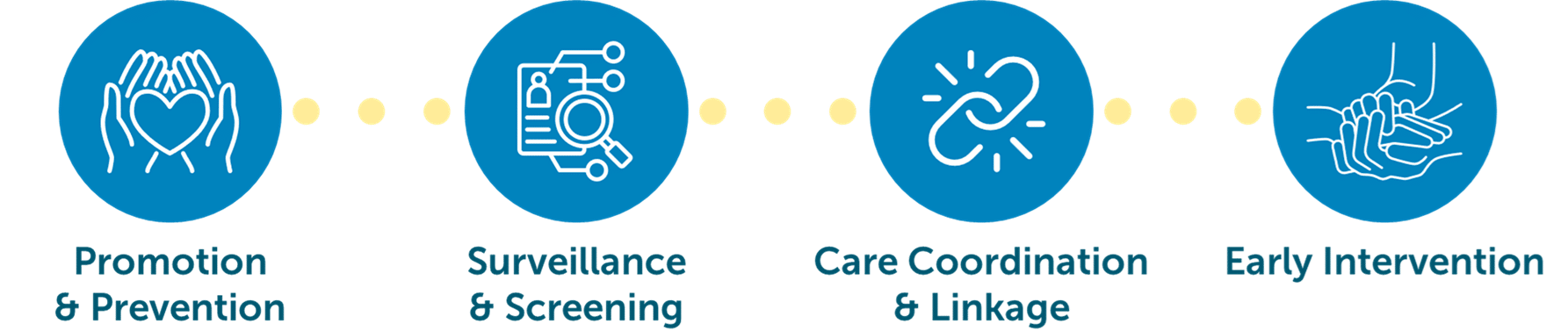
Community health centers were asked about their experiences implementing the ECD Care Continuum. Participants were given a common definition of the continuum, which includes developmental health promotion and prevention, screening and surveillance, linkage and care coordination for appropriate follow-up, and consultation or brief intervention. (Learn more about implementing the ECD Care Continuum by watching this webinar recording.)
ECD Care Continuum
Developmental Screening Phases
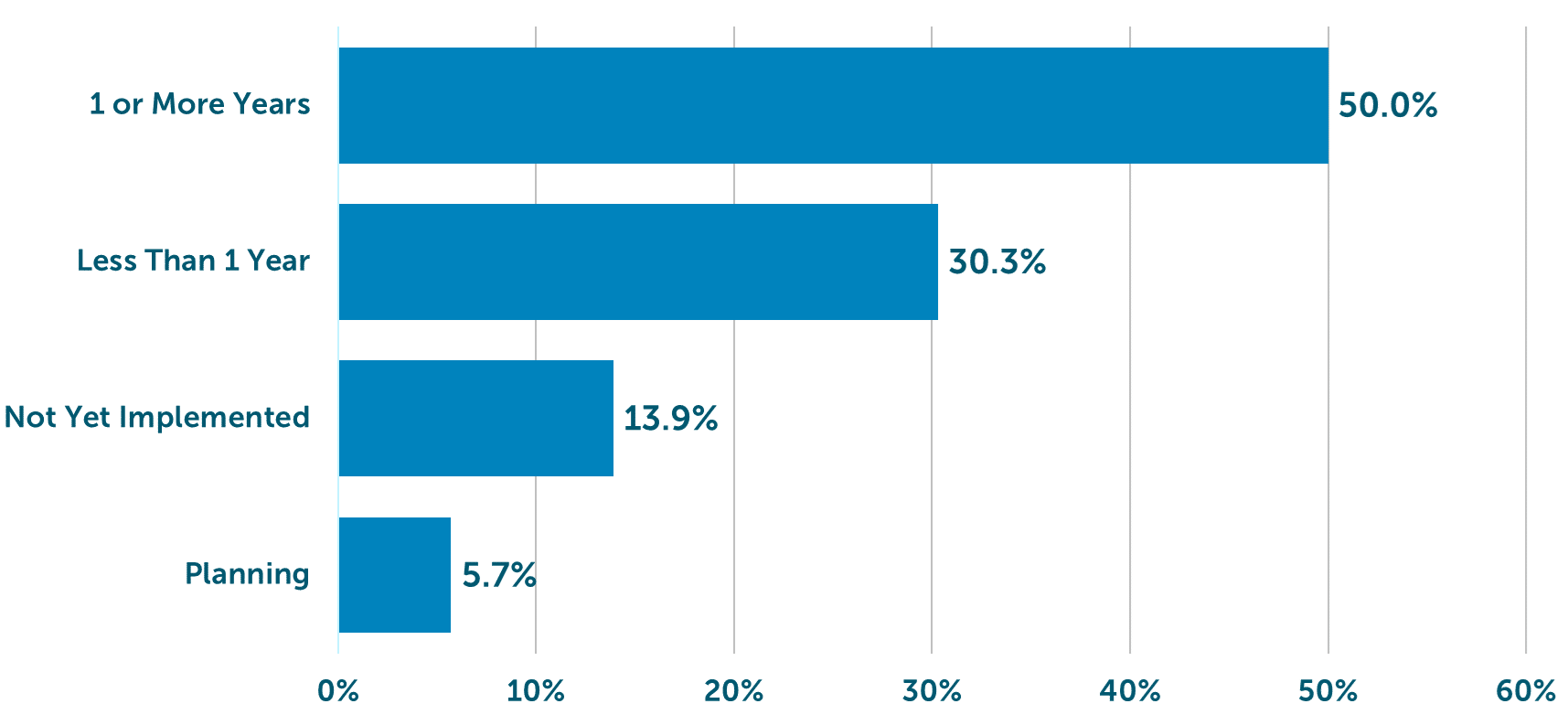
Respondents were asked, “In which phase of developmental screening implementation for children birth to five years old is your health center?” As of November/December 2023, nearly one-third (30.3%) of respondents have been conducting developmental screenings for children birth to five for less than one year at their health centers.
Percentage of surveyed community health centers (n=122) who responded to the question, “In which phase of developmental screening implementation for children birth to five years old is your health center?”
Please note that this survey question focused on the overall process and did not reflect screening rates. According to the 2022-2023 National Survey of Children’s Health, current developmental screening rates for children 9-35 months of age is 35.6% and lower for those with public insurance.
Providing Services According to the ECD Care Continuum
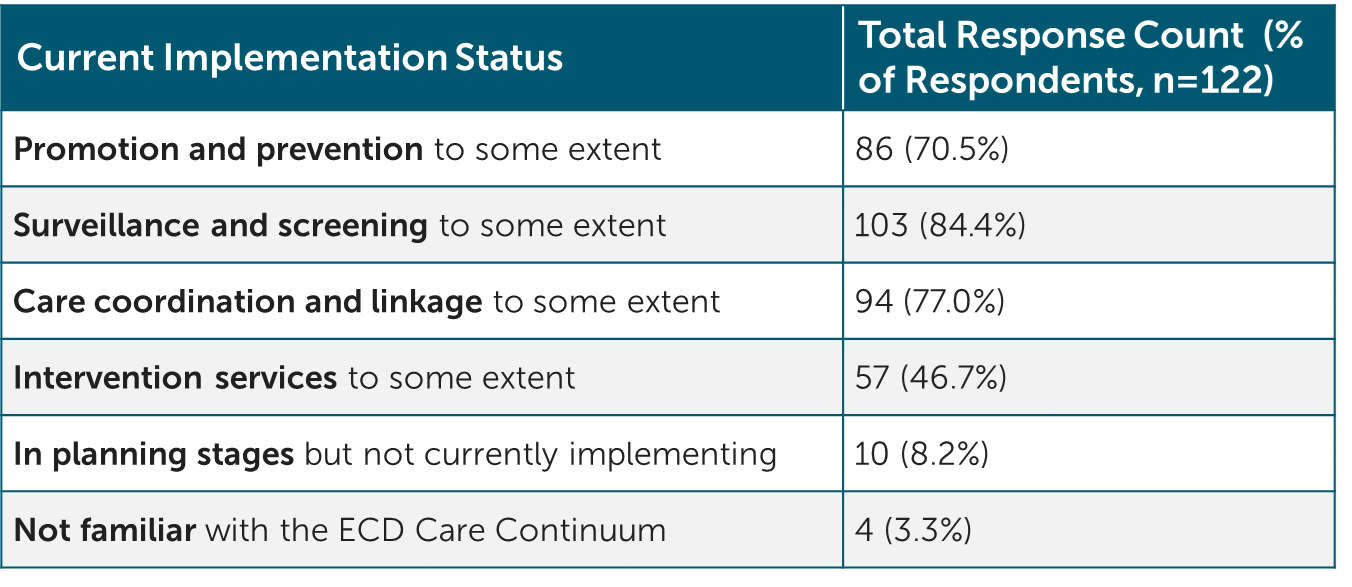
Respondents were asked, “To what extent is your health center providing early childhood developmental services according to the ECD Care Continuum?” Respondents were instructed to select all options that apply. As of November/December 2023, the majority of health centers are implementing at least one stage of the continuum to some extent.
Total response count and percentage of surveyed community health centers (n=122) who responded to the question, “To what extent is your health center providing early childhood developmental services according to the ECD Care Continuum?”