Infant-Toddler Educator Training: Critical Competencies

Infant-toddler educators have one of the most important jobs in the world, but they often lack practical resources to support their work.

The ZERO TO THREE Critical Competencies for Infant-Toddler Educators™ suite of early childhood professional development products and services helps educators build the essential knowledge and skills they need, in flexible and user-friendly formats. 

This infant toddler educator training connects research with everyday teaching practices that support the social-emotional, cognitive, and language and literacy development of infants and toddlers. 

Our competency model defines the specific knowledge and practices required for infant-toddler educators to be successful now, to support the future of our children. ZERO TO THREE Critical Competencies training offers multiple learning options rather than a single class, allowing educators and program leaders to explore infant toddler professional development that fits their learning goals and team needs. 

What Are Critical Competencies for Infant-Toddler Educators?

Competencies are the knowledge and skills educators use in their daily work. ZERO TO THREE’s infant toddler competency framework defines specific teaching practices that support three developmental areas: social-emotional, cognitive, and language and literacy development. 

These infant toddler educator competencies connect understanding of child development with practical decisions—how to respond to a child’s cues, support exploration, or encourage communication. The competency model focuses on infant toddler education because birth to three learning requires practices responsive to young children’s changing abilities and individual needs. 

When choosing professional development, the framework provides a concrete guide: identify the infant toddler core competencies relevant to daily practice, then explore learning options that address those areas. Critical competencies training offers competency based professional development that helps educators connect core knowledge and competencies with their work. 

Who Should Take Critical Competencies Training?

The program is designed for professionals supporting infant toddler education. Relevant audiences include: 

  • Infant toddler teachers and child care educators: Educators working with infants and toddlers in center-based group care settings. 
  • Family child care providers: Professionals supporting young children in home-based group care, including mixed-age settings. 
  • Program directors and administrators: Leaders exploring team training to strengthen staff knowledge and practice. 
  • Coaches, trainers, and specialists: Professionals supporting early childhood educators who may benefit from dedicated coaching, facilitator, or trainer pathways. 

As infant toddler training for child care teachers, the program emphasizes interactions and teaching practices specific to this age group. It provides professional development for infant toddler teachers seeking to connect developmental knowledge with everyday care and learning. 


The curriculum helps early childhood educators use evidence-based practices to bring more intentionality and more thoughtful connections to support children’s social emotional, cognitive, and language development.

What You Can Learn and Apply in Your Work

Critical Competencies training focuses on infant toddler pedagogy—the methods and practices used to support young children’s learning. It connects essential skills for infant toddler teachers with intentional teaching, responsive caregiving, and thoughtful teacher child interactions. 

The online course uses scenarios, observation, and reflection to help participants examine infant toddler teaching practices. Its learning outcomes include connecting developmental knowledge with supportive teaching, evaluating current practice, and planning how to apply new knowledge and skills. 

Social emotional development training for educators focuses on relationships, consistent caregiving, and children’s emotional expression. Supporting infant toddler social emotional development involves noticing emotional cues and responding with emotional support suited to the child. 

For example, when a toddler becomes upset during a transition, an educator can remain calm, acknowledge the feeling, and offer reassurance. These supportive interactions connect the competency area to a familiar classroom moment.  

Social emotional development training for infant toddler teachers helps educators reflect on how their responses support children’s developing ability to manage emotions. 

Infant toddler cognitive development training addresses how educators create learning opportunities through exploration and play. Supporting early cognitive development includes following children’s interests, sustaining attention, and offering assistance that encourages problem solving. 

For example, an educator helping a child use a shape sorter might model turning a piece, then allow time for the child to try. The focus is on supporting the child’s thinking and exploration rather than completing the task for them. This illustrates how cognitive development connects to everyday teaching decisions. 

Language and literacy training for infant toddler educators focuses on communication, vocabulary, and emerging literacy. Infant toddler language development training helps educators consider how their responses to sounds, gestures, and words create opportunities for conversation. 

For example, when a baby reaches toward a toy, an educator can name the object, describe the action, and pause for a response. These language rich interactions support language development before children use words. Early literacy training for educators also connects books and shared reading with meaningful exchanges. 

For multilingual learners in infant toddler classrooms, culturally responsive infant toddler teaching begins with understanding children’s home languages, cultural context, and individual needs.  

Family engagement helps educators learn about familiar words, stories, and communication practices. This culturally responsive teaching supports multilingual learners while connecting early literacy experiences with children’s lives. 

Critical Competencies Trainings and Learning Options for Teams

Learn more about the Critical Competencies offerings and customized packages that meet the specific needs of your team.

Group of people sit together in a circle in a conference room

Understanding what promotes social-emotional, cognitive, and language/literacy development gives the adult tools to support the developing child.

Why Choose ZERO TO THREE for Critical Competencies Training?

ZERO TO THREE’s infant-toddler training connects evidence-based practices with everyday teaching, helping educators strengthen interactions, reflect on classroom routines and apply new learning through real-world scenarios.

The Critical Competencies framework aligns with established professional standards and tools, including:

  • Professional standards: NAEYC and CDA criteria, with crosswalks to state competencies.

  • Observation tools: CLASS (Classroom Assessment Scoring System) and ITERS (Infant/Toddler Environment Rating Scale).

  • Early learning frameworks: Head Start Early Learning Outcomes Framework (ELOF).

These connections help educators and program leaders apply the competencies within existing professional expectations, though alignment does not confer credentials or state approval.

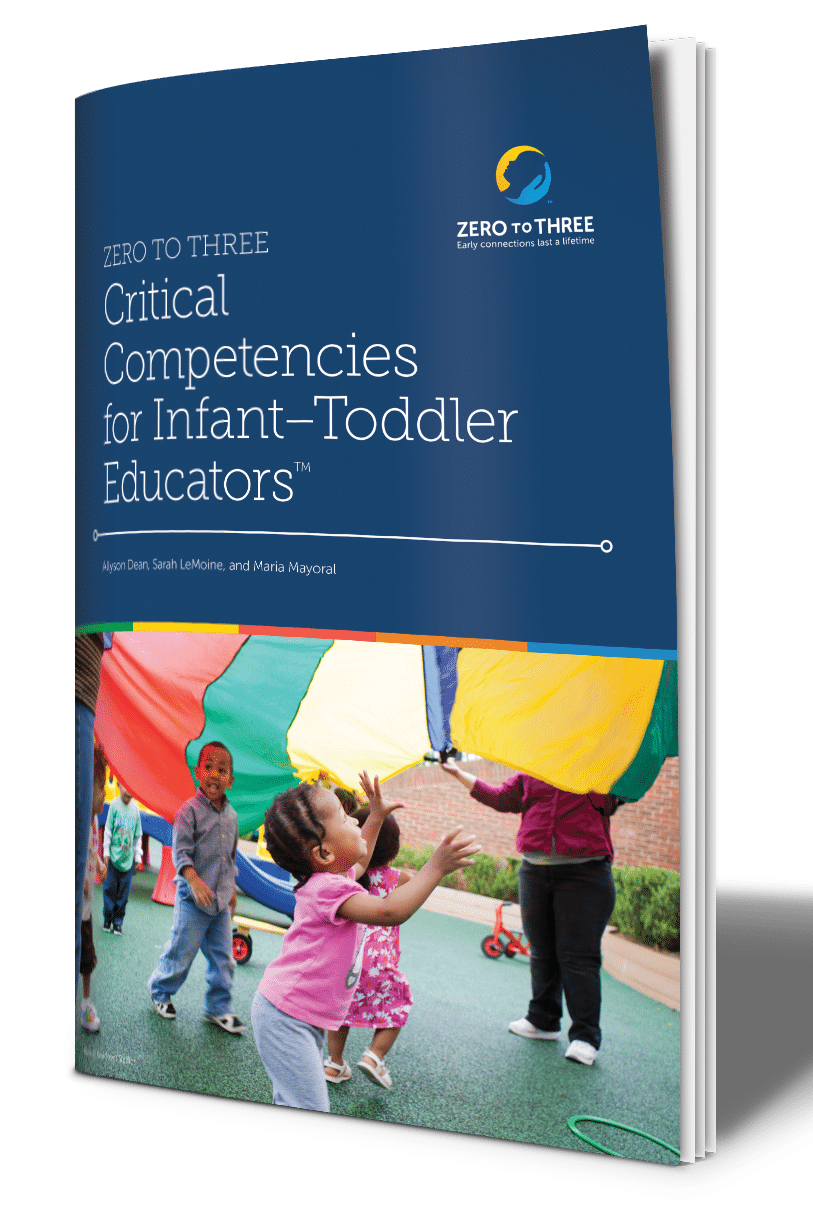
Get Our Free Critical Competencies eBook

This resource details the essential skills educators need to optimize the social-emotional, cognitive, and language and literacy development of all infants and toddlers.

GOWGvdxm_2016_Crit_Comps_cover_mockup_png
Advertisement
Advertisement

Get Updates on Trainings & Events

Get the most out of our free events and professional development opportunities.

Related Resources