The period from birth to age three is the most consequential window in human development — and it is now unfolding alongside AI.
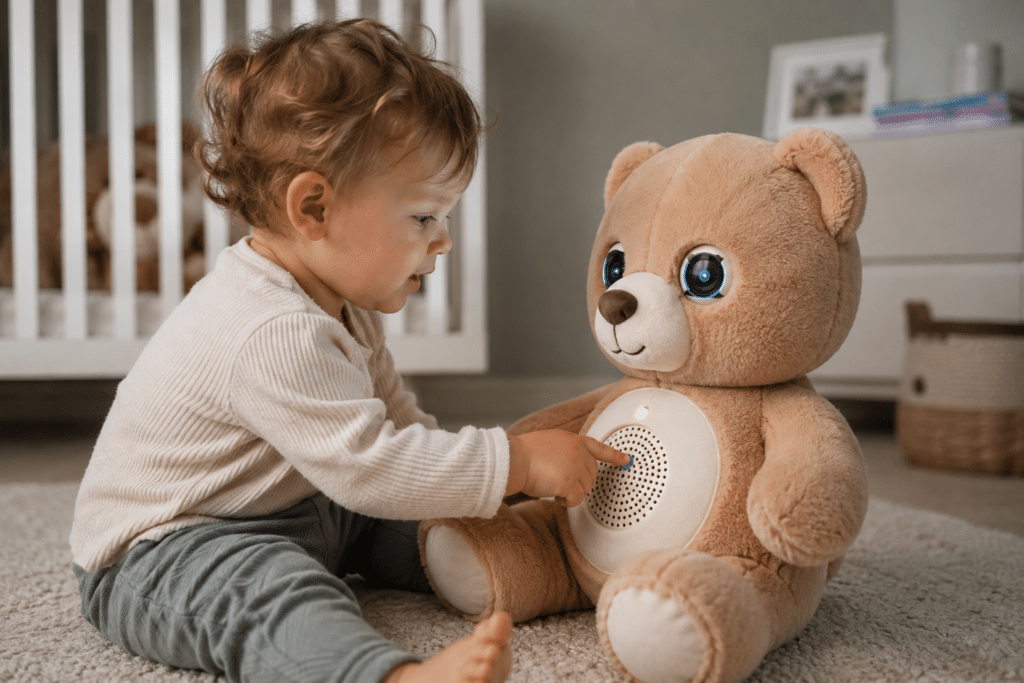
Embedded in toys, baby monitors, and parenting apps, AI is already reaching the youngest children at the very moment when relationships, play, and language are shaping the brain for life.
Yet most parents and early childhood educators have little guidance on what these technologies mean for healthy development, leaving families to navigate a complex and fast-moving landscape alone. AI is not going away, and the decisions made now will shape an entire generation.
While real risks exist, so does real opportunity — AI could support parents with developmental guidance, help educators personalize care, and expand access for underserved families.
Our goal is to ensure that as AI enters the earliest years of life, it does so in ways that put children first. Without a trusted, child-centered voice at the table, that space will be filled by those whose primary lens is not the well-being of young children.
ZERO TO THREE has joined the Center for Universal Education at Brookings for a series of webinars on how AI is transforming early childhood. Tune in for expert discussions on the impact of AI on child development and education, strategies to maximize benefits, reduce risks, and support young children’s well-being.
Dr. Radesky explains how today's digital media is capturing and commercializing young children’s attention, underscoring the need for stronger parent, platform, and policy responses.
Guidance for early childhood educators to make thoughtful, developmentally appropriate decisions about technology use by emphasizing intentional screen experiences that support rather than replace hands-on learning and relationships.
The Future of Artificial Intelligence in Early Childhood: Transforming the Field for Professionals and Children
Artificial intelligence in the early childhood field not only helps professionals by improving efficiency but also opens doors to more personalized learning experiences.
In this open letter, Dr. Meghan López focuses on how relationship-based home visiting supports families by building trust, addressing complex needs, and strengthening systems around them.