
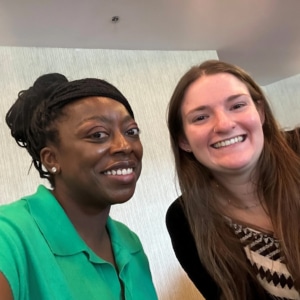
 I fell into this work almost by accident. A grad school advisor mentioned an opening, I knew I wanted to work with young children, and I said yes. That was five years ago. I didn’t expect it to change how I see everything.
My name is Delaney. I’m the Community Coordinator for Safe Babies in Cuyahoga County, the Cleveland area of Ohio. When I first started this work, it was embedded in the courts, working with babies who had already been removed from their homes. Now we work in prevention: reaching families before removal ever happens.
Poverty, trauma, and mental health can easily manifest as neglect, but those families need resources and support, not separation.
Moving upstream
When we made that shift, I honestly thought the work might be a little lighter. The families under the jurisdiction of juvenile court, I thought, were the ones with the most severe challenges. I was wrong about that. The families we work with in prevention face just as much, sometimes more. The difference is that when a baby is in a foster home, those basic needs are already being met by the foster parent or by the system. Someone is driving that baby to appointments. Someone is buying food. That’s not the case when families stay together and are struggling and don’t have the resources to be able to do those things nearly as easily. Now, getting food on the table and a ride across town for a pediatric visit — that is our work too.
That shift is what Safe Babies looks like in practice. We’re moving upstream, bringing together child welfare, early childhood, and community supports to connect families with what they need before a crisis leads to separation.
Support before separation
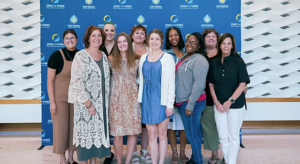 What I’ve come to understand is that poverty, trauma, and mental health don’t look like neglect because parents don’t love their children. They look like neglect because our system gives workers about 90 days — in our county, that’s roughly the timeline — to offer a short-term case plan to a family to try to address safety issues, and then decide whether a child needs to be removed. Ninety days is not enough time to solve poverty. There’s not enough time to process trauma. And so, children get removed, not because nothing could have been done, but because no one got there soon enough with the right tools.
Safe Babies means we don’t expect families to figure that out alone. It means building a coordinated network around them — helping them access food, transportation, healthcare, and early childhood supports so they can care for their babies safely at home.
For families we’ve served, we’ve been able to prevent the need for foster care, and that sets them on a lifelong trajectory of better outcomes.
A different path for families
That’s the whole reason prevention matters to me. If we can get to a family earlier — before the crisis, before the removal — and build relationships with them that get to the root of issues rather than just making referrals and checking boxes, the trajectory changes. We’ve served a large handful of families now who, without Safe Babies, probably would have ended up in the court system.
The work is not easier on this side. In some ways, it’s harder. Father engagement is more complicated. Basic needs are more urgent. But it is 100% worth it, because now we’re solving something instead of scrambling after things have already broken apart.
When I started this work, I wanted to work with young children. What I didn’t know then is that I’d spend five years learning how much those children’s lives depend on whether their parents have enough — enough support, enough time, enough trust — that help is real.