Before I came to this work, I spent years serving victims of violence in multiple settings. I watched mothers come into shelter with babies and toddlers who had witnessed violence, who were struggling, and who needed something I didn’t know how to give them. I could see that something was happening between those caregivers and their children. I just didn’t have the language or the training to understand it, let alone help.
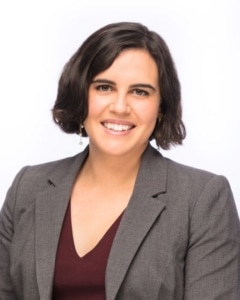
I am the Statewide Coordinator for the Infant-Toddler Court Program at The Children’s Center Utah. I started this job as a Community Coordinator, honestly nervous about working with infants, a population I had no experience with. I fell in love with it anyway, because I finally had tools that matched the need I’d been seeing for years.
Finding the tools that matched the need
One family stands out. Early in my time as a Coordinator, I worked with a couple who were certain domestic violence wasn’t part of their case. The kids hadn’t seen anything, they said, so it wasn’t an issue.
But as they worked through Child-Parent Psychotherapy and started engaging more deeply with the process, something began to shift. They started tracing back to their own childhoods, what they had witnessed growing up, and how it felt to not be able to go to a caregiver for safety. And as those pieces came together, their question changed. It went from “prove there’s a problem” to “how do we create a home where our children feel safe enough to come to us?”
That family was reunified. They built something new together.
Going upstream
What I’ve carried from cases like that into my current role is a deep belief that the system must go upstream. Right now in Utah, if a family walks into a child welfare office and says, “I need help,” there’s often very little that can be done… until there’s an open court case.
Families want help before something has to break, but often there’s no door to knock on until a court case is open.
We’ve seen what’s possible when a Coordinator reaches a family before the first court hearing. At our Southern Utah site, a family was identified as at risk due to a lack of services before they ever saw a judge. By the time they got to court, they were already engaged, and the removal was prevented.
That’s what Safe Babies is about. Not rushing in with predetermined solutions but asking families what they need and being willing to adjust.
Rural communities especially get left out when we assume one approach fits everywhere. A family in a frontier community where the nearest service provider is two hours away faces something entirely different than a family in a city.
The system has to be humble enough to ask, and flexible enough to respond. That’s the only way this works.