I’ve been in child care my whole life. Not because I planned it that way, but because it’s what I know and what I care deeply about. I grew up helping raise my five younger siblings. My first jobs at 13 were in a church nursery and as a babysitter. Now I am 24, working as a lead teacher, earning my associate’s degree in infant and toddler development, and raising my  son, Grey, who is 9 months old and full of life.
But for a long time, I didn’t think I should have a child because I am a Black woman, and I knew the statistics that women of color are three to four times more likely to die in childbirth. I worried until Juneau’s child care community showed me I was seen and valued.
When I was pregnant and didn’t yet have insurance, every prenatal appointment cost $600 out of pocket. On top of that, I was in an occupational endorsement program, which meant I wasn’t a full employee and that maternity leave wasn’t guaranteed. My employer created a pathway. That mattered more than I can explain.
Juneau is not an easy place to raise a child. You can only get in or out by boat or plane. There is a severe housing shortage. It took my partner and me two years to find an apartment, and we didn’t secure it until a month after Grey was born. Our rent is $1,950 a month. Child care waitlists are long. And with more than a million tourists coming through each summer, the infrastructure is stretched thin.
But I have also seen what happens when a community invests in child care workers.
When teachers are paid fairly and supported, they can show up fully for children. When they are working multiple jobs just to get by, that strain shows up in the classroom. I have seen it. I have lived it.
When teachers are struggling to take care of themselves, it bleeds into the way they take care of children. When we support teachers, children are supported.
Grey is here because people showed up for me.
I want every baby to have that. I want every mother to feel safe enough to bring her child into the world.
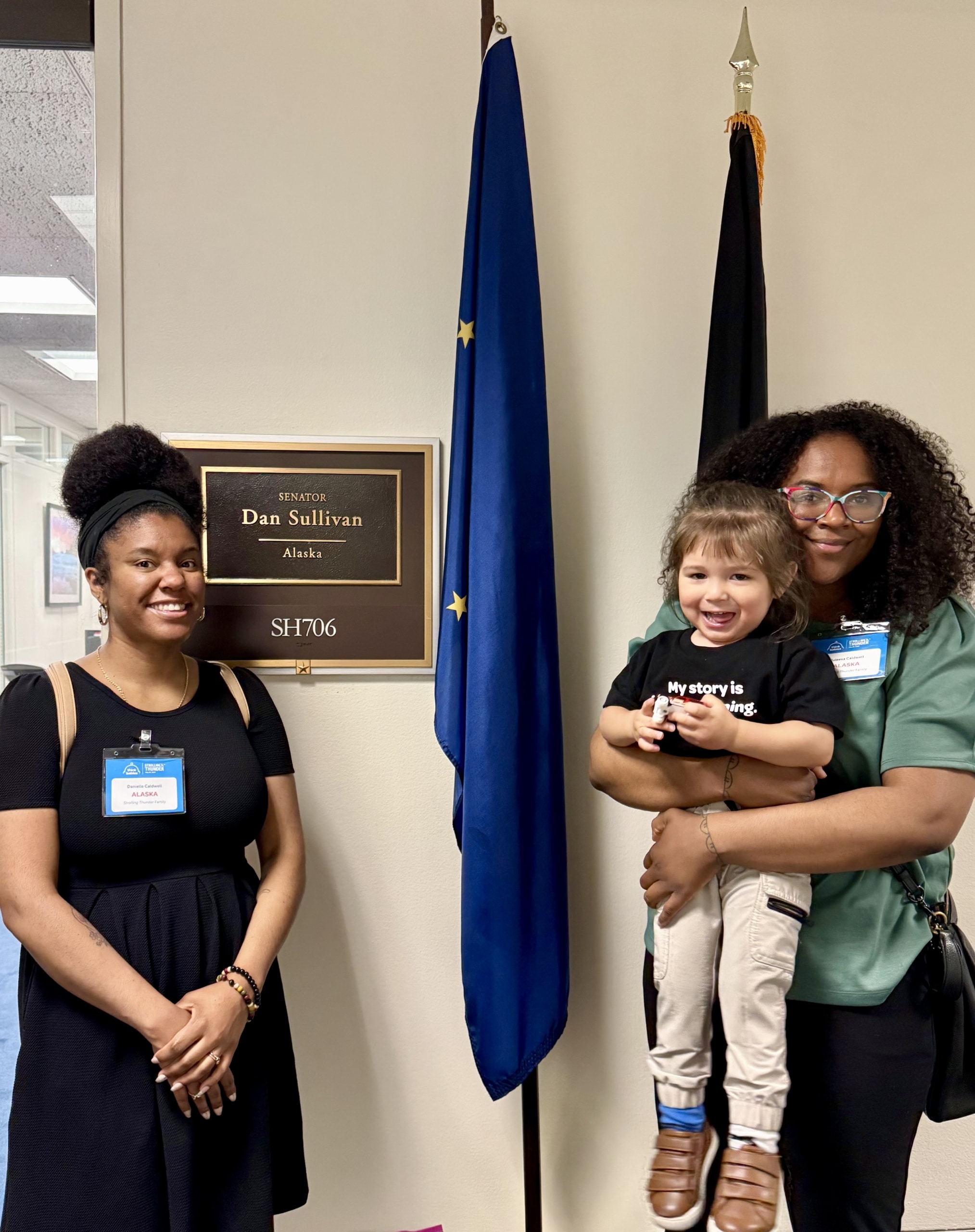
Baby Grey and his family share their story as part of Strolling Thunder 2026 where families from across the country meet with policymakers to talk about what programs families need to thrive.