
Evolving With Care
The DC:0-5 Revision Process
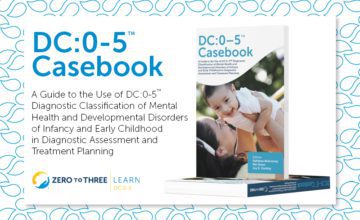
ZERO TO THREE is advancing a thoughtful, collaborative revision of the DC:0-5™ Diagnostic Classification of Mental Health and Developmental Disorders of Infancy and Early Childhood.
Guided by a diverse group of experts across research, practice, and policy, the review process is part of our regular cycle of reflection and refinement. The goal is to strengthen a trusted resource that professionals around the world use to support the mental health of babies, toddlers, and their families.
We look forward to sharing updates as this inclusive and thoughtful process moves forward.
Where We Are Now
The DC:0-5 Revision Committee has spent the past year reviewing the current classification system alongside emerging research, field feedback, clinical experience, and perspectives from professionals using DC:0-5 across diverse communities and settings.
The Committee is now in the intensive drafting and review phase of the work. Subcommittees are developing and reviewing proposed updates across the manual, with the goal of completing the Committee’s primary revision work this fall. From there, the revised manual will move through ZERO TO THREE’s editorial, design, and production process in preparation for release in 2027.
We’ll continue sharing updates here as the work progresses.
What Is Guiding the Revision?
As the Revision Committee considers updates to DC:0-5™, several priorities are guiding the work:
Build on a strong foundation.
The revision is intended to strengthen DC:0-5™, not reinvent it. The developmental, relational, and contextual approach at the heart of DC:0-5™ remains foundational to the work.Reflect advances in knowledge and practice.
The Committee is considering emerging research, evolving clinical knowledge, and changes in the contexts in which infants, young children, families, and professionals live and work.Learn from the field.
Feedback from DC:0-5™ users and other professionals has helped identify what is working well, where greater clarity is needed, and where the manual can better support consistent use across settings and systems.Strengthen clarity and usability.
A central focus is making the classification system clearer and easier to apply while preserving the clinical depth and developmental perspective that distinguish DC:0-5™.Keep culture and context integral.
The revision is considering how culture, relationships, family and community context, and broader environmental conditions inform understanding of infants and young children throughout the diagnostic process.Strengthen the multi-axial framework.
The multi-axial approach is foundational to DC:0-5™ and reflects that no single dimension can fully explain an infant or young child’s presentation. The revision is strengthening how the interconnections among the five axes are articulated, reinforcing an integrated understanding of the child within their developmental, relational, health, cultural, and environmental contexts.
What Does This Mean For Me Now?
DC:0-5 remains the current standard
There is no need to wait for the revised manual to begin learning or using DC:0-5. The current DC:0-5 manual remains the official classification system, and ZERO TO THREE’s current DC:0-5 professional development remains the recommended learning pathway.
The revision is building on the existing framework, not replacing it. Learning and using DC:0-5 now provides the foundation for understanding and applying future updates.
ZERO TO THREE is planning a thoughtful transition to the revised manual, including resources and learning opportunities to help current users and trainers understand what is changing and what is staying the same.
FAQs
No. The current DC:0-5 remains the official classification system, and current ZERO TO THREE training remains the recommended learning pathway. The revision builds on the existing framework, so learning DC:0-5 now will provide an important foundation for understanding future updates.
No. The revision is strengthening and updating a trusted diagnostic classification system, not creating an entirely new framework. Its developmentally informed and relationship-based approach remains foundational.
ZERO TO THREE is developing a thoughtful transition plan for current users, learners and Certified Trainers. Resources and learning opportunities will help the field understand what is changing, what is staying the same and how to apply the revised manual. More details will be shared as plans are finalized.
The revised manual is planned for 2027. The Revision Committee is currently completing its intensive drafting and review work, after which the manual will move through editorial, design and production. Sign up below to receive updates as the work progresses.
Community Leadership and Contributors
The revision is being shaped by an international, multidisciplinary committee bringing expertise in infant and early childhood mental health, child development, psychiatry, psychology, social work, pediatrics, research, policy, professional development, and clinical practice.
Mary Margaret Gleason, MD, FAAP, ZTT Board Member, Division Director of Child and Adolescent Psychiatry, Eastern Virginia Medical School & Children’s Hospital of the King’s Daughters
Nucha Isarowong, PhD, LICSW, IMH-E, former ZTT Fellow, DC:0-5 Certified Trainer, Director of Advanced Clinical Training (ACT) Program, Barnard Center for IECMH, University of Washington
Catarina Furmark, MPsy, DC:0-5 Faculty, Coordinates DC:0-5 Nordic Group, clinical psychologist at the child and adolescent psychiatric outpatient clinic (BUP) in Luleå, Region Norrbotten in the north of Sweden
Amalia Londoño Tobón, MD, Assistant Professor, Department of Psychiatry, Georgetown University School of Medicine (+ Axis III Lead)
Ayelet Talmi, PhD, The Gary Pavilion at Children’s Hospital Colorado, Anschutz Medical Campus and University of Colorado School of Medicine: Professor, Departments of Psychiatry and Pediatrics; Director, Section of Integrated Behavioral Health, Division of Child and Adolescent Mental Health; Director, Project CLIMB; Director, Harris Program in Infant Mental Health; and Associate Editor, Infant Mental Health Journal
Alice Carter, PhD, DC:0-5 Faculty, former Task Force member, Professor, Department of Psychology, University of MA, Boston
Maria Kroupina, PhD, DC:0-5 Faculty, Associate Professor, Division of Clinical Behavioral Neuroscience; Faculty, Department of Pediatrics Director, Birth to Three Clinic and Early Childhood Mental Health Program, Faculty, Adoption Medicine Clinic
Katherine (Kate) Rosenblum, PhD, ABPP, IMH-E, clinical and developmental psychologist, Professor, UM Department of Psychiatry and Director, Zero to Thrive
- Michelle Sarche, PhD, ZTT Board Member, Licensed clinical psychologist and Associate Professor, University of CO Anschutz Medical Campus, Centers for American Indian and Alaska Native Health
Carmen Rosa Noroña, MSEd, LICSW, IMH-E, DC:0-5 Faculty, IECMH Clinical Workforce Diversity Collective member, Child Trauma Clinical Services & Training Lead, ETTN Boston Site Associate Director, Assistant Professor of Pediatrics, Boston Medical Center, Boston University
Harleen Hutchinson, PsyD, DC:0-5 Faculty, IECMH Mentor-Clinical; Executive Director, The Journey Institute, Inc. WAIMH Assistant Editor
Miri Keren, MD, LBSM, DC:0-5 Faculty, DC:0-3 Revisions Taskforce, Clinical and Research Consultant, Bar Ilan University in Tel Aviv, Beit Izi Shapira Center, Failure to Thrive unit at the Schneider Hospital for Sick Children, founder and past director of Geha Mental Health Center in Petah-Tiqwa, WAIMH past president (2012-2106), honorary president of Israel WAIMH Affiliate, chairperson of the World Psychiatric Association Perinatal and Infant Mental Health Section
Doug Vanderbilt, MS, MS, MBA, Chief, Division of Developmental-Behavioral Pediatrics, Co-Director, Behavioral Health Institute; Medical Director, Newborn Follow-up Program and Boone Fetter Clinic, Las Madrinas Chair in Developmental-Behavioral Pediatrics, Children’s Hospital Los Angeles; Professor of Clinical Pediatrics (Educational Scholar), Keck School of Medicine of USC
Aditi Subramaniam, LMHC, R-DMT, IECMH-E, DC:0-5 Certified Trainer, ZERO TO THREE Fellow, IECMH Clinical Workforce Diversity Collective member, IECMH Director at Massachusetts Society for the Prevention of Cruelty to Children, Faculty, Fellowship in Early Relational Health at Umass Chan Medical School, National Trainer of Touchpoints, MASSAIMH Board Member and Policy Committee co-chair, Dance Movement Psychotherapist/Therapist
Wanjiku Njoroge, MD, Assistant Professor at the University of Pennsylvania Perelman School of Medicine, Associate Chair of Diversity, Equity, and Inclusion for the Department of Child and Adolescent Psychiatry and Behavioral Sciences, Faculty at the PolicyLab and Medical Director of the Young Child Clinic (YCC) at the Children’s Hospital of Philadelphia (CHOP)
Charles (Charley) Zeanah, Jr., MD, DC:0-3 Revisions Taskforce, DC:0-5 Taskforce, former ZTT Board Member, ZTT IECMH Board Workgroup member, Clinical Mentor for ZTT Fellowship Program, ZTT 2022 Lifetime Achievement Award, Mary Peters Sellars Polchow Chair of Psychiatry, Professor of Psychiatry and Pediatrics, Tulane University School of Medicine and Director of the Institute of Infant and Early Childhood Mental Health
Noelle Hause | ZERO TO THREE (PhD, IMH-E)
Kathleen Mulrooney | ZERO TO THREE (MA, IMH-E)
Linda Kuo, Senior Program Associate
Stay Informed
Fill out the form below to stay updated.