CONTACT: Gina Davis, [email protected], 202-864-2934
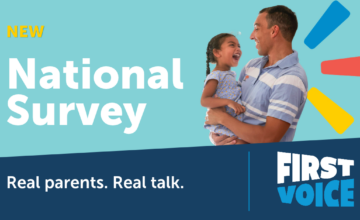
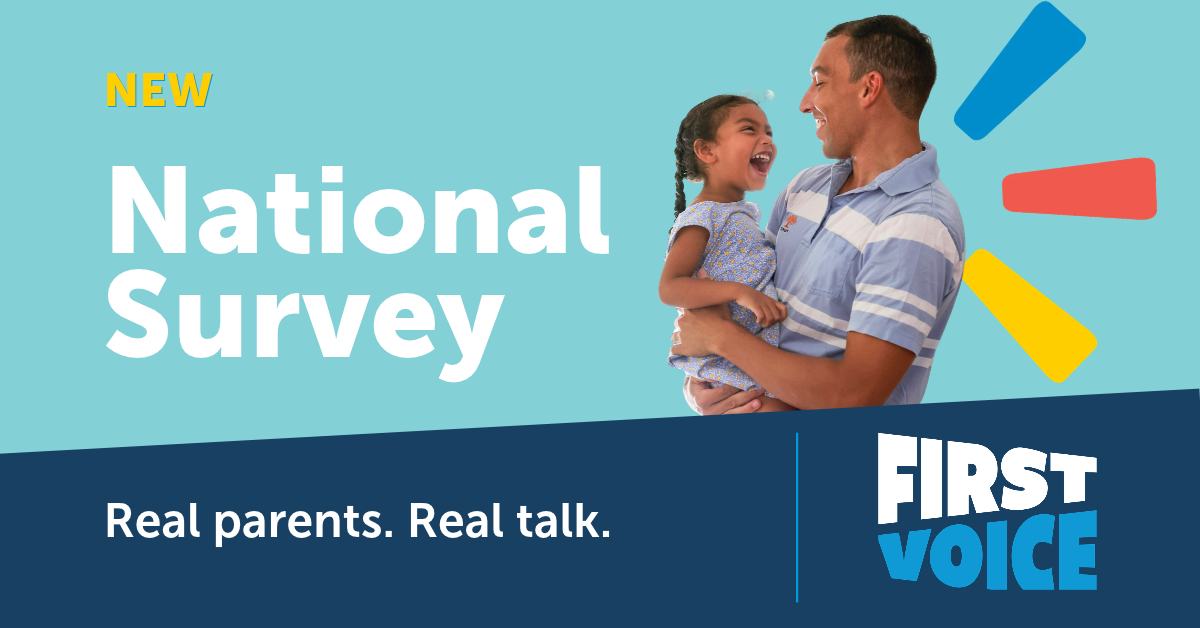
PORTLAND, OREGON—Today, ZERO TO THREE, a national nonprofit dedicated to ensuring all babies and toddlers have a strong start in life, released First Voice, a national survey of over 2,200 parents of children ages 5 and under. Building on a research base established in 2015, the findings show how parenting has changed in the past decade, and the pressures parents face as they work to help their children thrive.
Findings definitively demonstrate that today’s parents of young children show greater affection, prioritize mental health and emphasize teaching and guiding rather than discipline. Asked to compare their approach with their own parents’ across more than a dozen parenting behaviors:
- 61% say they tell their kids “I love you” more often than their own parents did
- 60% say they focus more on their child’s mental health
- 57% show more physical affection
- 53% say they focus more on their own mental health than their parents did with them
- 53% say they focus on teaching and guiding their child rather than disciplining
“Today’s parents are leading with love. They know what kind of childhood they want for their kids, and they’re showing up with more affection, more play and more value placed on children’s feelings and well-being,” said Rebecca Parlakian, Senior Director of Programs at ZERO TO THREE. “But many are running on empty—balancing work and family, stretching their budgets to cover basics like food and rent, and managing their own stress while trying to be patient, present parents. They know what they want to give their children. They need more support to make it possible. Supporting parents is supporting babies, and all of us—from policymakers and employers to grandparents and neighbors—have a role in giving families the time, trusted advice and practical help they need.”
Additional findings include:
- Parents feel confident, but parenting is harder than they expected. Most parents feel confident in their abilities, yet 53% say raising a child is harder than they expected. 42% say managing their own mental health is the single biggest challenge they’ve faced in the last month—ahead of money, judgment, or loneliness.
- Parents want policymakers to do more. Two in three parents say the government should be doing more for families with young children. Topping their list: universal free pre-K, paid parental leave, and social media and AI regulation.
- Moms still carry more of the day-to-day work. Even as most dads feel confident and engaged, 80% of moms lead day-to-day parenting. 72% of moms and 45% of dads agree that moms carry more of the burden, and 56% of moms want more help.
- Parents find AI useful, but have questions about trust and safety. Among parents who have used AI tools like ChatGPT for parenting questions, a strong majority rate them as helpful — more so than Google searches or social media. Fewer parents say they broadly trust parenting information from AI. Most also say AI companion toys and devices are inappropriate for children under age 7 and want stronger safety and quality rules for AI content aimed at young children.
About the survey
The survey was conducted online by The Loran Group from July 28 to August 15, 2026, among 2,202 parents of children ages 1 to 5. It included a nationally representative sample of 1,400 parents, plus additional booster samples of African American, Hispanic, Native American, and lower-income parents, which were weighted back to their national proportions. The margin of error is ±2% at a 95% confidence level. The survey was informed by 17 online discussion groups with parents held in June and July 2026.
Read the full survey findings at zerotothree.org/parentsurvey
About ZERO TO THREE
ZERO TO THREE works to ensure all babies and toddlers benefit from the family and community connections critical to their well-being and development. Since 1977, the organization has advanced the proven power of nurturing relationships by transforming the science of early childhood into helpful resources, practical tools, and responsive policies for millions of parents, professionals, and policymakers. For timely expert insights on the latest developments in early childhood, from policy changes to research breakthroughs and what they mean for babies and families, check out our Beyond the Headlines series. For more information, please visit zerotothree.org or follow us on LinkedIn, Instagram, Threads, Facebook, and X.