

RATTLED: Babies, Families and a Year of Growing Strain
A national snapshot of life for families with infants and toddlers in 2025 reveals a troubling reality: economic pressure, emotional distress and uncertainty intensified across the year even as families fought to provide stability and love for their babies. We are grateful to Stanford University’s RAPID Survey Project for providing the data that made this report possible.
Jump To:
Babies Bear the Brunt of Economic Hardship
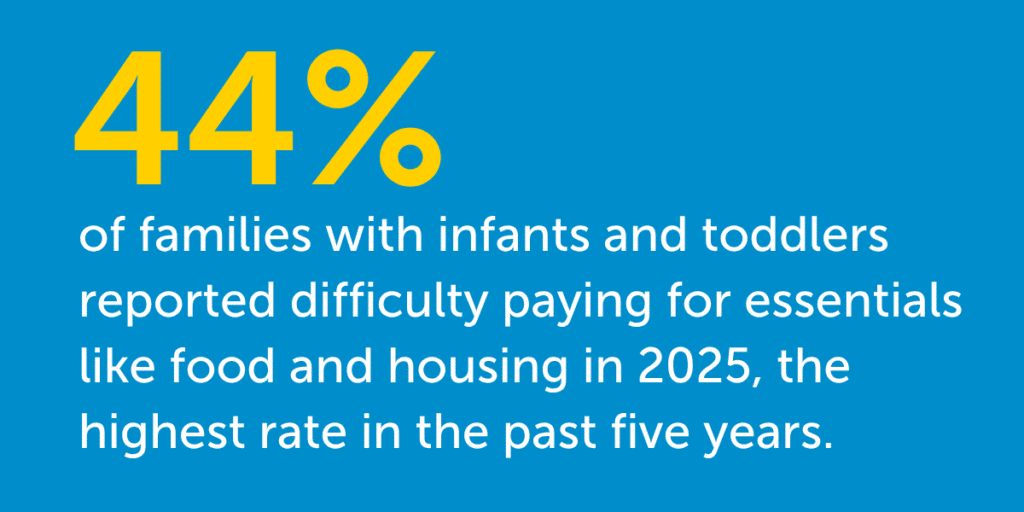
Families across the country reported mounting hardship paying for the very basics like food, housing and healthcare, and by the end of 2025, 53% of parents reported difficulty paying for the essentials. Low-income families in particular felt the squeeze of rising costs of “everything” from food and utilities to child care, diapers and strollers. Food insecurity among parents with babies and toddlers nearly doubled from the start to end of 2025, and renters increasingly struggled to keep up with housing costs.
Rent takes up most of our income, and on top of that, the utility bills keep rising. Some months, it feels like we have to choose between keeping the lights on or buying groceries… I just want stability for my family.
Parent in Tennessee
Basic Needs
By the end of 2025, over half of families with infants and toddlers (53%) struggled to pay for essentials such as food and housing.
Food Insecurity
Food insecurity among parents with infants and toddlers – measured by not having money to afford balanced meals and skipping meals or eating less because there wasn’t enough money – increased from 13% in January 2025 to 24% in December 2025.
Housing Instability
1 in 5 families who rented their home reported difficulty paying their rent and 30% worried about not being able to afford their rent in 2025.
Growing Disparities
Families living with the lowest incomes, Latine and Black parents, and families living in rural communities experienced these challenges most acutely.
Showing Slide 1 of 4
Parents’ Stress Is Affecting Babies, Too
As economic pressure intensified, parents reported rising levels of anxiety, depression, stress and loneliness. Families worried not only about surviving financially, but also about how ongoing stress was affecting their babies’ emotional well-being and development.
Ongoing uncertainties have caused increased stress and anxiety for both me and my child, impacting our emotional well-being and daily routines.
Parent in Texas
Child Development Concerns
Across 2025, an average 55% of parents reported some level of concern about their child’s learning, development or behavior and about a quarter reported they were very concerned, a rate that is double any previous year since 2020.
Parent Anxiety
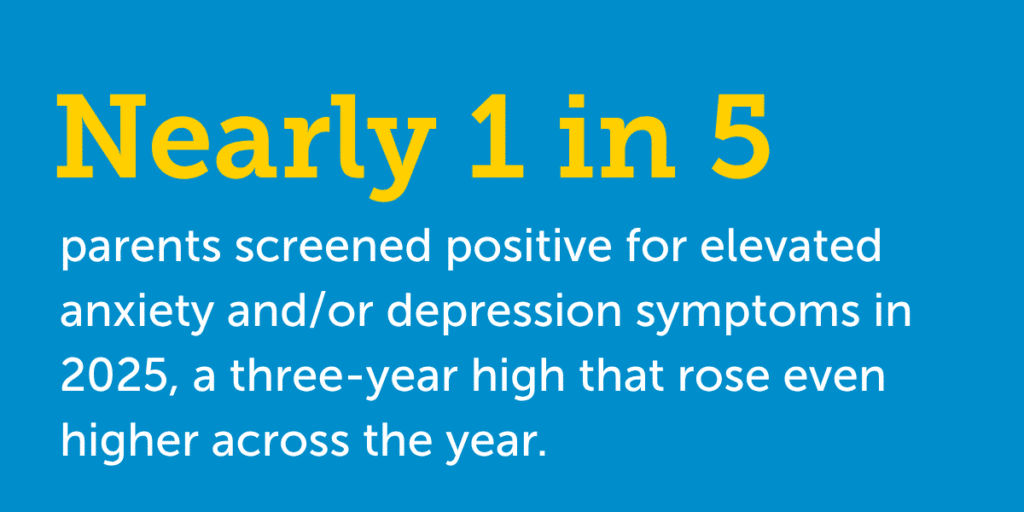
From January to November 2025, the percentage of parents reporting elevated anxiety symptoms rose from 21% to 29%.
Parent Depression
From January to November 2025, the percentage of parents reporting elevated depression symptoms rose from 14% to 25%.
Disparities in Health Care and Child Care
Parents in immigrant and Latine communities reported higher rates of missed preventative health care visits and days of child care.
Showing Slide 1 of 4
Families Demonstrated Resilience Despite Hardship — But They Need Support
Even faced with rising challenges, parents continued to create routines, nurture relationships and show up for their babies. But resilience alone cannot replace strong policies and resources babies need during their first three years, a critical period of brain development that sets the foundation for all later learning and health. Families repeatedly called for affordable child care, housing stability, mental health care, paid leave and economic relief.
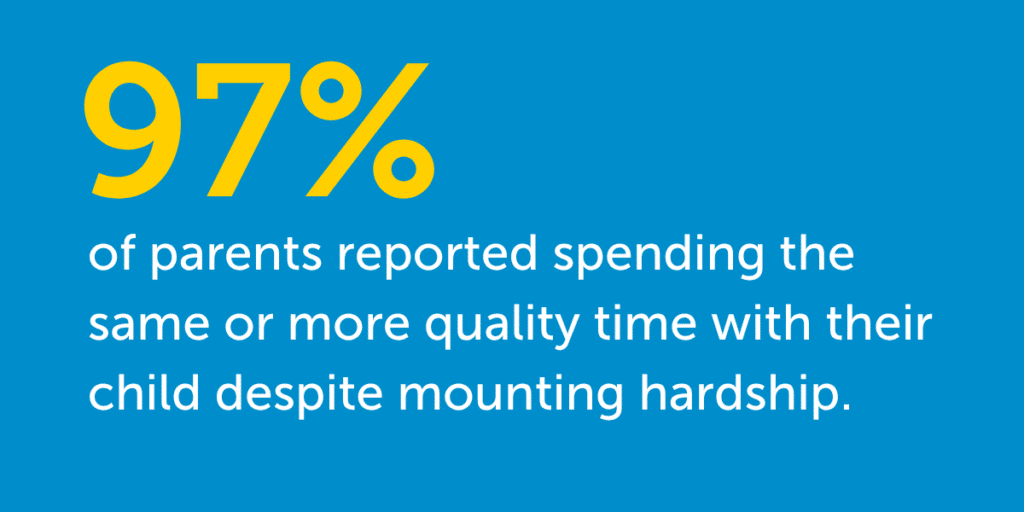
Talking openly, spending time together, and leaning on our faith and close friends has really helped us stay strong through challenges. Knowing we’re not alone makes a big difference.
Parent in Nebraska
Families Need Support
Resilience alone cannot replace strong policies and resources during babies’ first three years, a critical period for brain development.
Early Investments
Parents emphasized that investments in affordable health care, fair wages and family stability strengthen not only individual families, but the country’s future.
Thrive, Not Just Survive
Families repeatedly called for affordable child care, housing stability, paid leave, mental health care, food security and economic relief — policies that help families thrive, not just get by.
Showing Slide 1 of 3
Babies Can't Wait
Families are clear about what they need: affordable health care, food security, stable housing, mental health support, paid leave, and access to quality child care. Policymakers have an opportunity and responsibility to act.
Related Resources

Article
Top 10 Wins for Babies in 2025
In 2025, babies won at both the federal and state levels thanks to the power of supporters raising their voices and families sharing their personal and powerful stories.
Resource
Early Childhood Poverty: A Lasting Impact on Babies’ Health and Development
Early Head Start is the only federal program dedicated to the comprehensive development of pregnant women, infants and toddlers in families with low incomes.
