5 Ways Parents’ Emotional Regulation Matters for Healthy Child Development

Key Takeaways
- Children learn how to handle stress by watching the adults around them.
- Naming and talking about emotions helps children understand and express their feelings.
- Calm support, co-regulation, and apologizing after mistakes build trust and healthy relationships.
Learn how to stay calm with kids, manage parenting stress and support your child’s emotions with simple, practical strategies.
When life gets frustrating, staying calm can be difficult. Your child refuses to put on their shoes. They fuss about getting into their car seat. You’re late for an appointment and traffic is a mess.
How we respond to everyday stress has a big impact on our overall well-being. It also has a big impact on how the children in our care respond to stress. Our responses to stress—helpful, unhelpful, and sometimes even harmful—can last a lifetime for the children we care for.
So what do we do to keep life from overwhelming us, and passing that “overwhelm” on? The advice is the same whether you’re a parent, a child care provider, or another professional whose work influences the lives of children.
Develop healthy habits that reduce stress
A sense of calm can improve your relationships with others, including the children in your care. When you feel overwhelmed, you’re more likely to overreact to a child’s challenging behaviors by yelling or using harsher punishment. Choices you wouldn’t make when calm.
Keeping your own stress levels manageable can help. Good places to start? Exercise, spending time in nature, calming self-talk, hobbies, or mindfulness activities. You can even use a quiet moment to reflect on a child’s challenging behaviors and plan for setting and reinforcing limits the next time they happen.
Finding healthy habits to help you reduce stress and manage your own emotions keeps you feeling good. It also pays off because children learn just by watching you.
Model emotional regulation for children and describe what you do to calm down
Describing your own feelings aloud does two things:
- Shows that even adults get frustrated/angry/sad
- Teaches children that there are ways to cope with these big emotions.
What you say: “I just had those car keys a minute ago—this is so frustrating! OK, let me take a few deep breaths. Then I’ll go back and look again really carefully.” Children learn the names of feelings and how you can manage them.
Recognizing your own feelings is a good parenting strategy. It also helps you tune in to your own emotional state. This can help you pause and calm yourself before responding to the challenges of caring for children.
Help children name and understand their emotions
The “noticing” part is a wonderful way to show a child that their feelings matter. Learning feelings words makes it easier for them to communicate using language, instead of tantrums, as they grow.
“I see you’re disappointed that grandma’s leaving. Do you want to come to the window and wave goodbye?” or “Oh no! You worked so hard building that tower. You looked angry when the dog knocked it over.”
Share your calm with co-regulation
Babies and toddlers experience frustration of their own. They may be hungry, tired, or don’t want to leave their toys to take a nap. But the part of the brain responsible for self-regulation doesn’t begin to develop until about age 4 (and that process isn’t complete until young adulthood).
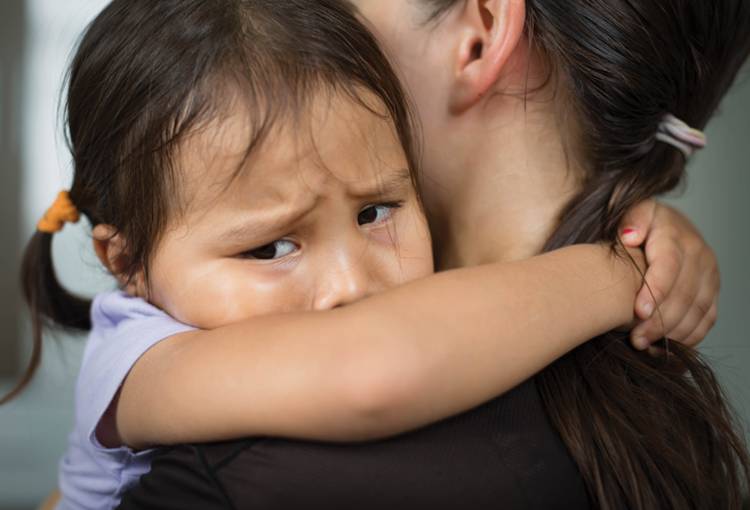
How can adults help in the early years? That’s where co-regulation comes in. Co-regulation is when adults use their own support, care, and nurturing to help a child manage their emotions. What does this look like? Holding and rocking. Using a soft voice or singing. Acknowledging their feelings. Giving hugs when they need them. Staying calm when children are not.
Take responsibility when your own emotions overwhelm you.
There’s no such thing as a perfect parent or caregiver, so a good goal is “good enough.” You will make mistakes. You will lose your cool. When this happens, acknowledging your mistake (without blaming the child’s behavior) builds a sense of trust and safety. “I know I sound scary when I yell. I’m sorry.”
Your relationship with a child sets the tone for future relationships. Sometimes people get angry, and it’s not the end of the world. Apologizing when you’re wrong and setting things right is part of building a healthy, nurturing relationship.
Study Spotlight
A longitudinal study followed families from infancy to middle childhood to explore how parents’ emotional regulation relates to children’s mental health.
Key findings:
- Parents’ emotional regulation in early childhood was linked to children’s mental health years later
- Higher parenting stress was associated with more emotional and behavioral symptoms in children
- Parents who used healthier emotional regulation strategies reported lower parenting stress
- Sensitive and responsive parenting interactions were linked to better mental health outcomes for children
These findings highlight how caregiver wellbeing and parent child interactions shape children’s emotional development over time.
Citation:
Iwanski, A., Lichtenstein, L., Paulus, J., Werner, C., Walper, S., Vierhaus, M., Spangler, G., & Zimmermann, P. (2025). Parental emotion regulation and children’s mental health: Longitudinal mediation by parenting stress and sensitive challenging parenting. Personality and Individual Differences, 246, 113262.

Next Up
Go to Next Resource
resource
It Takes Two: The Role of Co-Regulation in Building Self-Regulation SkillsRead about the role of co-regulation in building self-regulation skills. A child's temperament impacts how they are able to regulate.