
Parallel Play in Early Childhood: A Guide for Professionals
Learn how parallel play supports early development and how professionals can observe, encourage and discuss it with families.
Key Takeaways
Parallel play involves proximity and peer awareness without requiring coordinated activity.
Children learn social, language, cognitive and motor skills while playing side by side.
Play stages overlap and should not be treated as rigid developmental deadlines.
Thoughtfully designed environments can encourage parallel play without forcing interaction.
Observation should consider children’s communication, regulation and relationships across settings.
Professionals can help families recognize the learning taking place during parallel play.
Watching two toddlers play side by side without sharing materials or coordinating their actions can reveal a great deal about their developing social, emotional, language and cognitive skills.
This stage of play, known as parallel play, is a common part of early childhood development. Although the children may appear to be playing independently, they are aware of one another, experimenting with social proximity, developing play skills and learning how it feels to participate in a shared environment.
For early childhood professionals, clinicians, early intervention specialists and others who support young children, understanding parallel play can inform learning environments, developmental observations, responsive interactions and conversations with families.
Professionals who want to connect everyday play with the science of early development can explore ZERO TO THREE’s The Growing Brain training program. The curriculum offers practical strategies for supporting early brain development, communication, cognition, behavior, relationships and play.
What Is Parallel Play?
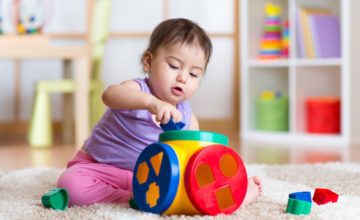
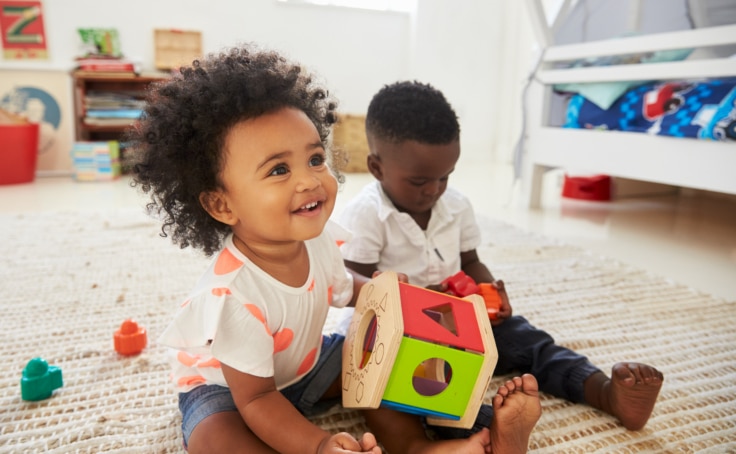
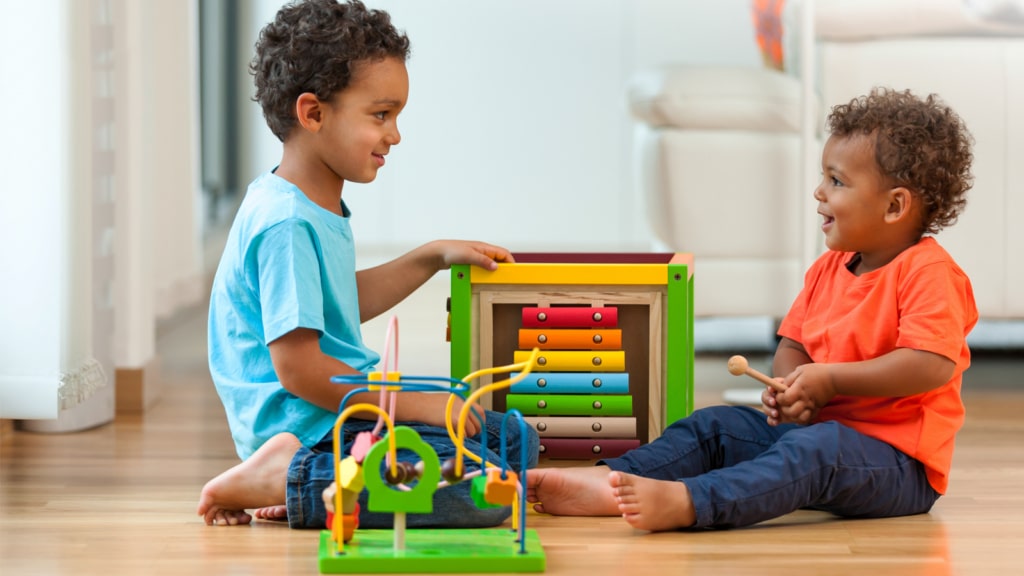
Parallel play is when young children play near one another while remaining focused on their own play. They may use similar toys, copy one another’s actions or watch what another child is doing without organizing a shared activity
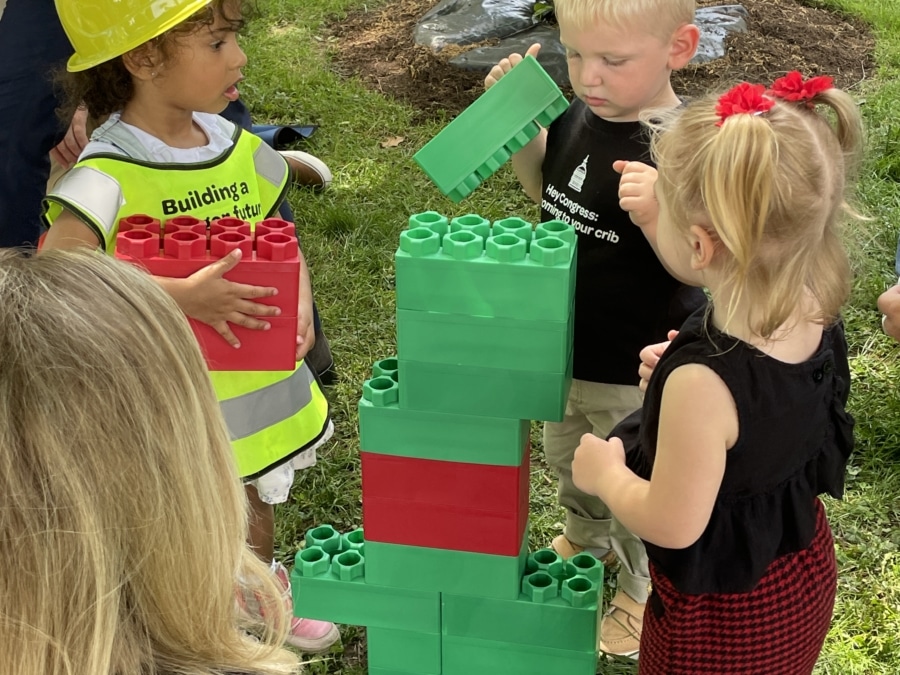
Picture two young children sitting next to each other in the block area. One child is stacking blocks to build a tower, while the other is playing with trains nearby. Although they are engaged in separate activities, they occasionally glance at each other’s play with curiosity and interest. They are not directly playing together or sharing the same activity. They are playing independently alongside one another. This is an example of parallel play, where children play near their peers while remaining focused on their own activities. Even without direct interaction, valuable learning and development are taking place as the children observe one another, explore their interests, and become more comfortable playing alongside peers.
Professionals observing parallel play may notice children:
Choosing to play near other children
Watching or glancing at a peer
Imitating another child’s actions
Selecting similar play materials
Exchanging brief words, sounds, gestures or smiles
Remaining focused on separate play goals
Understanding parallel play helps professionals recognize that children playing independently in the same space are still gaining valuable experience with people, feelings, communication and boundaries.
Why Is Parallel Play Important?
Parallel play supports several areas of a child’s development. Even when children play quietly beside one another, important learning is happening.
Children Learn by Watching
Babies and toddlers are natural observers. As a child watches another child stack blocks, roll a car or serve pretend food, they gather new ideas for their own play. They may try those actions right away or return to them later.
This observation and imitation can strengthen problem-solving, creativity and play skills. It also helps children become increasingly aware of what other people are doing.
Professionals can support this learning by allowing children time to observe before expecting them to participate more directly.
It Builds Early Social Skills
Playing near other children lets a child practice being in the same space without the demands of sharing a plan or taking on a role. The child begins to notice facial expressions, gestures, movements and how peers play.
These small moments lay a foundation for social skills. A look, a laugh or a copied action can be an early form of connection, even when the children are not yet playing together.
Parallel play can also give children opportunities to experience social proximity, personal boundaries and the emotions that arise when spaces are shared.
It Supports Communication and Language Development
Children hear new words when professionals describe play and when other children communicate nearby. They also begin connecting words with actions, objects and social experiences.
Professionals can support language development by narrating what is happening:
“You’re rolling your blue car. Maya is rolling a ball.”
This approach is useful for encouraging language development without pressuring either child to respond. Gestures, facial expressions, sounds and imitation should also be recognized as meaningful forms of communication.
It Supports Social-Emotional Development
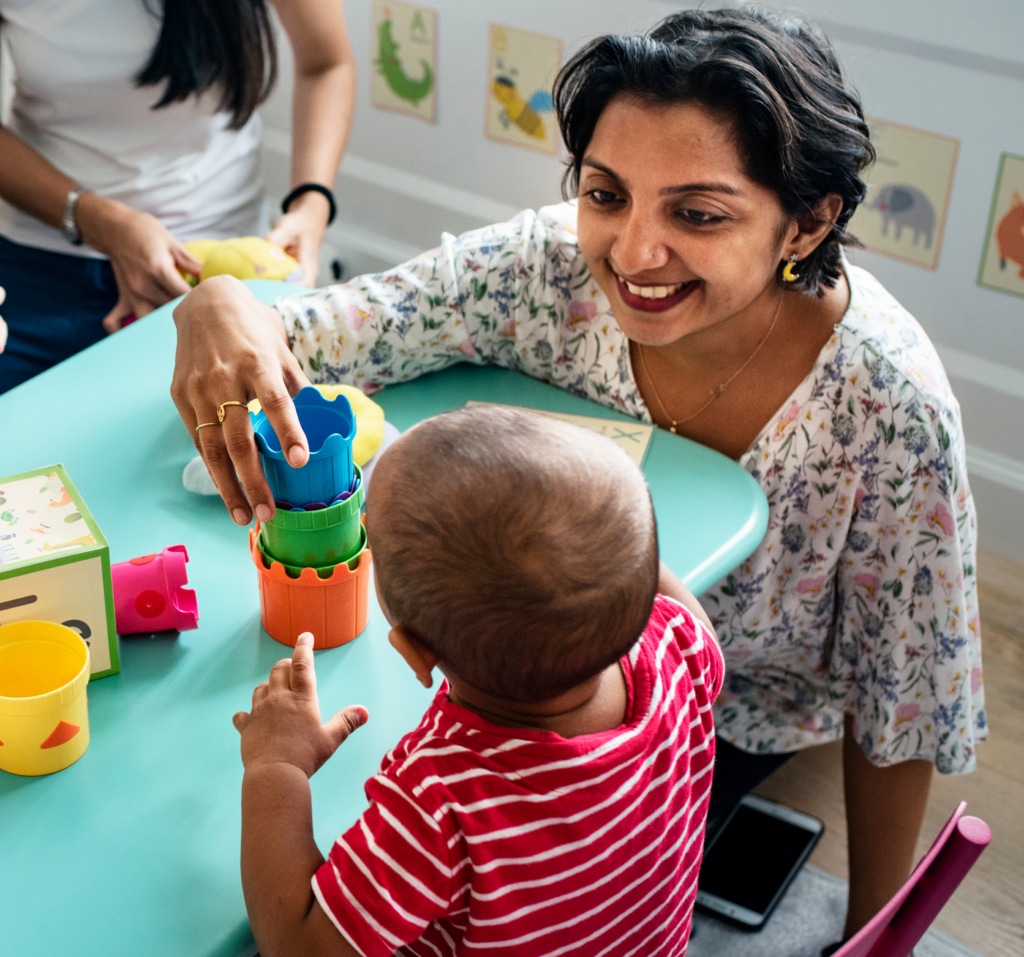
Parallel play gives a child room to explore at their own pace while a trusted adult remains nearby. That balance—independence with connection—can help children feel confident trying new things.
A professional’s presence matters. When adults respond with warmth and patience, they provide a secure base from which children can explore relationships and their environment.
Parallel play also creates natural opportunities to support emotional regulation. Children may need help waiting, managing frustration, protecting their play space or recovering when another child takes a desired toy.
It Strengthens Thinking and Motor Skills
Building, drawing, scooping, sorting and pretending help develop cognitive and motor skills. When children play near one another, they also encounter new ideas: a different way to stack blocks, move a toy or use a spoon in pretend play.
Parallel play can support attention, imitation, cause-and-effect learning, flexible thinking and early self-control.
What Does Parallel Play Look Like?
Every child plays differently, but parallel play often looks like two children doing similar activities close to one another while following separate ideas.
Professionals might observe children:
Building separate towers using different toys beside one another
Pushing cars on different paths while occasionally watching each other
Digging in a sandbox with separate buckets and shovels
Shaping play dough on separate trays
Using dolls, dishes or pretend food to create different stories nearby
The children may play side by side, copy each other, exchange a toy or say a few words. Those brief connections do not mean parallel play has ended.
Stages of play often overlap, and children may move between them depending on the activity, setting and people involved. One child may engage in cooperative play with a familiar sibling but prefer onlooker or parallel play in a new child care setting.
What Are the Six Stages of Play Development?
Researcher Mildred Parten described six stages of play development. These stages of play are useful patterns for observation and planning—not a schedule every child must follow or a tool for diagnosing developmental differences.
A child may use several types of play in the same day.
| Stage | What It May Look Like |
|---|---|
| Unoccupied play | A baby or young child explores through movement, looking, and handling objects without an obvious play plan. |
| Solitary play | A child plays alone and focuses on their own activity. |
| Onlooker play | A child watches other children play but does not join them. |
| Parallel play | Children play nearby with similar or different materials but follow separate ideas. |
| Associative play | Children interact and may share play materials, although each child still follows their own activity. |
| Cooperative play | Children organize play around a shared idea, role, or goal. |
A child begins moving toward more interactive forms of play gradually. Parallel, associative and cooperative play can all appear during early childhood, and earlier forms of play do not disappear. Even socially confident children sometimes want to play independently.
Parallel Play vs. Other Types of Play
The clearest differences among these types of play are how much attention children give one another and whether they share a goal.
| Type of Play | What It Looks Like | What Professionals May Notice |
|---|---|---|
| Solitary play | A child plays independently. | The child remains focused on their activity with little attention to nearby children. |
| Onlooker play | A child watches other children without joining. | Sustained observation, questions, gestures or cautious movement closer to the activity. |
| Parallel play | Children play nearby but pursue separate activities. | Imitation, peer awareness or use of similar materials without a shared plan. |
| Associative play | Children interact without organizing their play around one goal. | Talking, exchanging materials or commenting on one another’s play. |
| Cooperative play | Children share roles, ideas or goals. | Negotiation, turn-taking, joint planning and collaborative problem-solving. |
Children move toward increasingly interactive play gradually and may use several types of play at different times. These stages are helpful patterns—not tests children must pass.
At What Age Does Parallel Play Begin?
Parallel play often emerges at around 15 months, but there is no firm start or end date. A child’s temperament, communication skills, familiarity with the setting and relationship with the other children can all affect how they play. A child who enjoys cooperative play with familiar peers may prefer to watch or play nearby when entering a new group.
Development is not a race. Professionals should look at how a child develops across settings and over time instead of drawing conclusions from one moment, one activity or one observation.
How Professionals Can Encourage Parallel Play
Encouraging parallel play does not require elaborate activities or expensive toys. A thoughtfully arranged environment, simple materials and responsive adults can create meaningful opportunities.
Arrange the Environment Intentionally
Create clearly defined activity areas with enough room for children to play near one another without feeling crowded. Children should be able to move closer to a peer or create more distance when needed.
Consider how noise, lighting, movement and the number of children using an area may affect participation. Some children may feel more comfortable approaching peers in quieter spaces or smaller groups.
Offer Open-Ended and Duplicate Materials
Place similar play materials within reach, and provide duplicates of highly preferred items when possible. Two balls, two trucks or two scoops can reduce frustration while allowing children to explore the same kind of activity.
Useful materials include:
Blocks and construction materials
Paper, crayons and washable art supplies
Play dough and sensory tools
Toy animals, dolls and vehicles
Dishes, clothing and pretend food
Balls, ramps and simple movement materials
Open-ended materials allow children to imitate one another while still following their own ideas.
Try Simple Parallel-Play Activities
- Build side by side. Give each child blocks and space for a separate creation.
- Make art together—but separately. Offer individual paper and art materials at the same table.
- Explore sensory materials. Provide separate portions of play dough or several tools in a shared sensory area.
- Set up pretend play. Offer dolls, toy animals, dishes and pretend food so each child can follow their own story.
- Move in the same space. Let children roll balls, push vehicles or dance near one another without requiring coordinated play.
Let Each Child Set the Pace
Adults may want to help a quiet child join the group but watching and playing nearby are meaningful forms of participation.
Professionals might say:
“Come join us on the carpet.”
“You can play here beside them when you’re ready.”
“There are blocks available if you would like to build nearby.”
This language communicates that the child is safe and supported without making social participation a demand.
Describe What You Notice
Simple narration helps children connect words, actions and people. For example:
- “You’re making a tall tower. Leo is building with blocks, too.”
- “You both chose yellow crayons.”
- “You’re watching how Sam makes the train go.”
- “Maya put her animal in the barn. You put yours beside the fence.”
There is no need to quiz children or insist that they answer. Responsive narration can support connection and language while allowing each child to remain focused on play.
Avoid Forcing Interaction
Parallel play does not require children to talk, share, or work toward a common goal. Requiring these behaviors before children are ready can interrupt meaningful observation and exploration.
What is play-based learning?
Do Children Need to Share During Parallel Play?
No. Sharing and working together are not required during parallel play. Toddlers are still learning to wait, manage strong feelings and understand that another child has wants of their own.
Wanting the same toy is developmentally expected. It does not mean the activity has failed or that either child is behaving badly.
Stay close enough to provide co-regulation, describe the problem and set a clear boundary:
“You both want the truck. Mia is using it now. Here is another truck while you wait.”
If a child grabs or becomes upset, respond calmly:
“You really wanted that truck. I won’t let you pull it from his hands. Let’s find another toy.”
Step in when someone may be hurt or when children need help calming down. Over time, steady adult guidance helps children develop the language and skills needed for waiting, taking turns and solving problems with others.
Observing and Documenting Parallel Play
Parallel play can provide useful information about how a child approaches peers, communicates, responds to shared environments and manages emotions.
When observing, professionals might document:
Which peers, activities and settings the child approaches
How close the child chooses to play to others
Whether the child watches or imitates peers
How the child communicates during play
How the child responds when materials are limited
Whether the child seeks adult support
How adult language or environmental changes affect participation
Whether similar patterns appear across different days and settings
Record specific, observable behavior rather than interpretations. For example, “Ava watched Mateo roll the car three times and then rolled her own car down the ramp” provides more useful information than “Ava played appropriately.”
One observation should not be used to draw a broad developmental conclusion. Look for patterns over time and consider the child’s relationships, temperament, communication, regulation and experience within the setting.
How to Discuss Parallel Play With Families
Families may wonder why their child does not appear to be playing directly with other children. Professionals can help them recognize the learning taking place during side-by-side play.
Begin with a specific observation:
“Today, I noticed that Jordan played beside another child at the block table. They watched one another and began using the blocks in similar ways. This kind of side-by-side play gives children opportunities to observe peers and practice being in a shared social space.”
When discussing parallel play with families:
Describe what was observed without labeling or judging the child.
Explain the social, language or cognitive learning that may be taking place.
Avoid comparing the child with peers.
Clarify that stages of play overlap and do not follow rigid deadlines.
Invite the family to share what they notice at home or in other settings.
Discuss strategies that can be used consistently across environments.
Strengths-based communication can help families understand that playing alongside another child is not an absence of social learning.
When Broader Developmental Observations May Need Attention
Preferring parallel play on its own is usually not a cause for concern. Children differ in temperament and may interact differently across people, places and days.
Professionals should consider the broader developmental picture, including how a child:
Communicates verbally and nonverbally
Uses and responds to gestures
Responds to people, sounds and social interaction
Connects with familiar caregivers
Regulates emotions and behavior
Participates across different settings
Learns and uses new skills
A loss of previously used skills should also be taken seriously.
Document specific observations and follow the organization’s procedures for developmental screening, supervisory consultation, family communication and referral. Professionals should share observations without attempting to diagnose a child based on one behavior or type of play.
Turn Everyday Play into Developmentally Informed Practice
Those quiet moments of building, drawing, pretending and playing beside another child are not empty moments. Young children learn by watching, experimenting, and gradually becoming comfortable with others.
By arranging thoughtful environments, following children’s cues and responding with developmentally appropriate support, professionals can make these everyday experiences even more meaningful. Careful observation also helps educators and providers communicate with families from a strength-based perspective.
Deepen your understanding of the science behind play and early development with ZERO TO THREE’s The Growing Brain training program. Designed for professionals who work with infants, toddlers and their families, the curriculum connects early brain development with practical approaches to everyday play, behavior, communication, relationships, cognition and executive function.
Frequently Asked Questions About Parallel Play
Yes. Parallel play is a common pattern in early childhood. It allows children to observe others, try new ideas and grow comfortable around peers without having to coordinate a shared activity.
There is no set timeline. It often becomes noticeable around age 2 and can continue into the preschool years alongside more interactive types of play. Children may return to parallel play when they are in a new setting, focused on an activity or seeking less social interaction.
Parallel play is better understood as a pattern or stage of play development than as a milestone with a firm deadline. Children may move among solitary, onlooker, parallel, associative and cooperative play depending on the context.
Yes. A 3-year-old may use parallel, associative and cooperative play at different times. Professionals should consider the child’s development across settings and over time rather than expecting one type of play in every situation.
Professionals can model and support waiting, exchanging materials and taking turns, but sharing is not required for parallel play. Providing duplicate materials and setting calm boundaries can support children without forcing coordinated interaction. The concept of sharing is not usually developmentally appropriate until between 3-4 years old.
In solitary play, a child plays independently without focusing on nearby children. During parallel play, children play near one another and remain engaged in separate activities, but they may watch, imitate or briefly communicate with each other.
Associative play often becomes more common as children become increasingly interactive. Starting around 18-24 months, children may talk and exchange materials while still following separate ideas. The last stage of play is cooperative play which involves shared roles, plans or goals. As children get older, these forms of play overlap rather than unfolding on a strict timetable.
Watching, or onlooker play, can be part of healthy play development. Allow the child to observe without pressure, offer familiar materials nearby and describe what the other children are doing. The child may gradually move closer or begin imitating an activity when they feel ready.
Parallel play by itself is a typical form of early play and does not indicate that a child has autism. If broader concerns arise about a child’s communication, behavior, relationships or development, professionals should document their observations and follow established screening, communicating respectfully and collaboratively with the child’s family, and making referrals for additional support when appropriate.

Related Resources
Distillation
Buzzwords Explained: Play-Based Learning
For children, play isn’t a break from learning. It is learning. Explore how play-based learning activities support development in the first three years.
Resource
A Year of Play
Browse fun seasonal activities by month to find play activities that promote your child's development all year.
