Did you know?
📉 In 2023, the US Chamber of Commerce Foundation reported that child care issues cost states anywhere from $500 million to over $2 billion annually in economic activity.
Featuring stories from Strolling Thunder 2025 families.
That is the reality Gabby faced in Arizona. With no licensed providers in her county for children under age three, she and her husband had to rely on Facebook groups to find care, never knowing if it would be safe or stable. When their fourth child was born, Gabrielle left her job. Not because she wanted to, but because they had no other option.
It is a financial trap that families across income levels are stuck in. Jessica, a mom of five in Vermont, had to scale back her career because the cost of full-time child care made working financially pointless. Only because her parents could relocate and help did she manage to avoid leaving the workforce entirely.
When families cannot afford reliable care, employment decisions are often affected. Some parents reduce their work hours, decline career advancement opportunities, delay educational pursuits, or leave the workforce entirely. These choices can result in reduced income, limited economic mobility, and long-term financial consequences for families already struggling to balance competing expenses.
The challenge is particularly acute for families seeking infant child care, where costs are often high and available spaces are limited. Parents may spend months searching for affordable options while juggling work responsibilities and caregiving needs. For some, the lack of accessible childcare creates ongoing financial stress that affects nearly every aspect of family life.
Child care affordability is not simply a family issue, it is a community challenge that influences economic security, workforce participation, and opportunities for children to thrive.
T’Kayla in Missouri is on track to pay $24,000 a year for child care, more than she owes in student loans. The price of a safe, nurturing environment for her daughters should not be higher than a college degree, but in America’s current system, it is.
Carly in Tennessee thought she had found a solution. She joined a waitlist for a highly rated center before her daughter Hazel was even born. But just before returning to work, the center stopped accepting infants under 18 months. Like many parents, Carly had to reduce her hours and rely on a patchwork of part-time care and shifting work schedules. It is working for now, but it is not sustainable.

Did you know?
📉 In 2023, the US Chamber of Commerce Foundation reported that child care issues cost states anywhere from $500 million to over $2 billion annually in economic activity.
Royce in Alabama started looking for care when she was just three months pregnant. Waitlists ran up to two years. Even if they could find a spot, the $220-a-week price tag was unaffordable. They made too much to qualify for assistance, yet not enough to cover the costs. When their baby Sovanny was born, they still did not have child care. Royce had to take time off work. They had no choice.
I want to contribute to the workforce but can't because lack of child care is such an obstacle.
Royce S.
Many parents describe the constant challenge of balancing work and caregiving responsibilities, especially when options are limited. While some families seek flexible arrangements or explore how to work from home with a baby, remote work is not a substitute and is often difficult to sustain while meeting the needs of a young child. Long-term solutions require investments that expand access to affordable care and support families in every community.
These Are the Faces of Strolling Thunder 2025
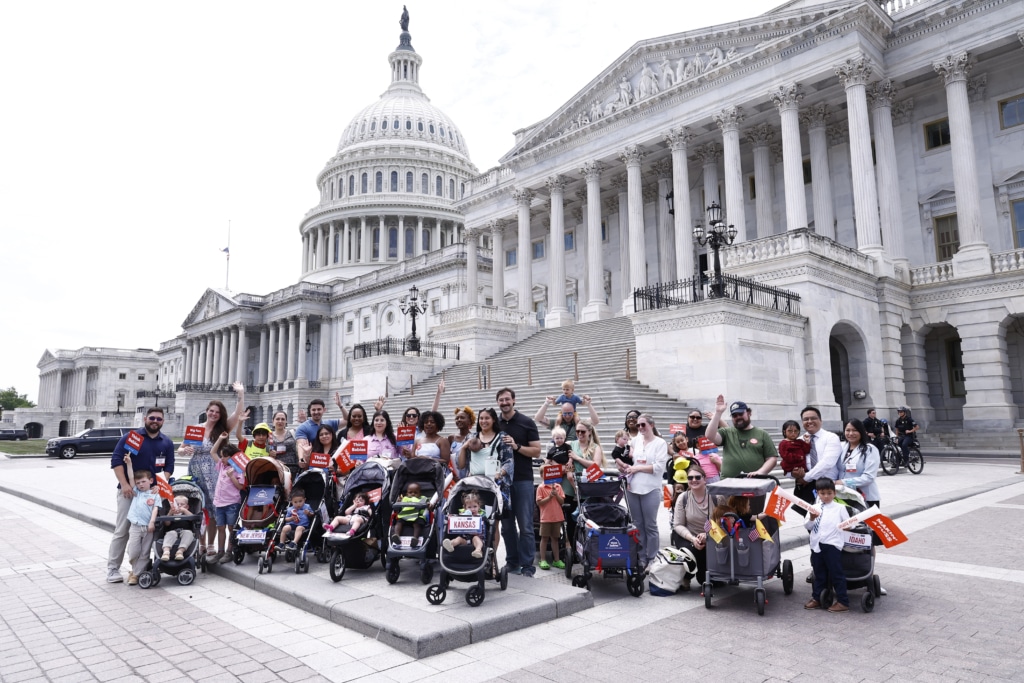
Gabrielle, Jessica, T’Kayla, Carly — and dozens of others — are among the 51 families traveling to Washington, DC for Strolling Thunder 2025. They’re bringing their babies, toddlers and lived experiences directly to policymakers to make one thing clear: the child care crisis is not abstract. It’s personal, it’s urgent, and it spans every corner of the country.
Quality child care supports early development. It helps children thrive. But it also supports parents, the economy, and entire communities.
Investments can help lower costs for families, increase the availability of care, and strengthen the workforce that provides these essential services. Subsidies and financial assistance programs help eligible families access care they might otherwise be unable to afford, while public-private partnerships can expand innovative solutions that meet community needs.
That is why policymakers must not only invest in programs like the Child Care and Development Block Grant, but also oppose cuts to essential child care funding streams that existing providers rely on, including the Social Services Block Grant and the Child Care Entitlement to States. Without strong public investment, families will keep making impossible choices. And the cost of that, both in lost potential and economic strain, is something we all pay.
States across the country are also exploring initiatives designed to improve access to care, increase support for childcare providers, and strengthen early childhood systems. These efforts recognize that affordable, high-quality care is a critical component of family well-being and economic security.


|
Join us to build a world where all babies can thrive.
|