
Artificial intelligence (AI) is becoming part of everyday life, from toys and learning apps to tools that support parents and early childhood professionals. But for professionald and parents using AI, it’s important to understand that not all AI tools are created equal, especially when it comes to babies and toddlers.
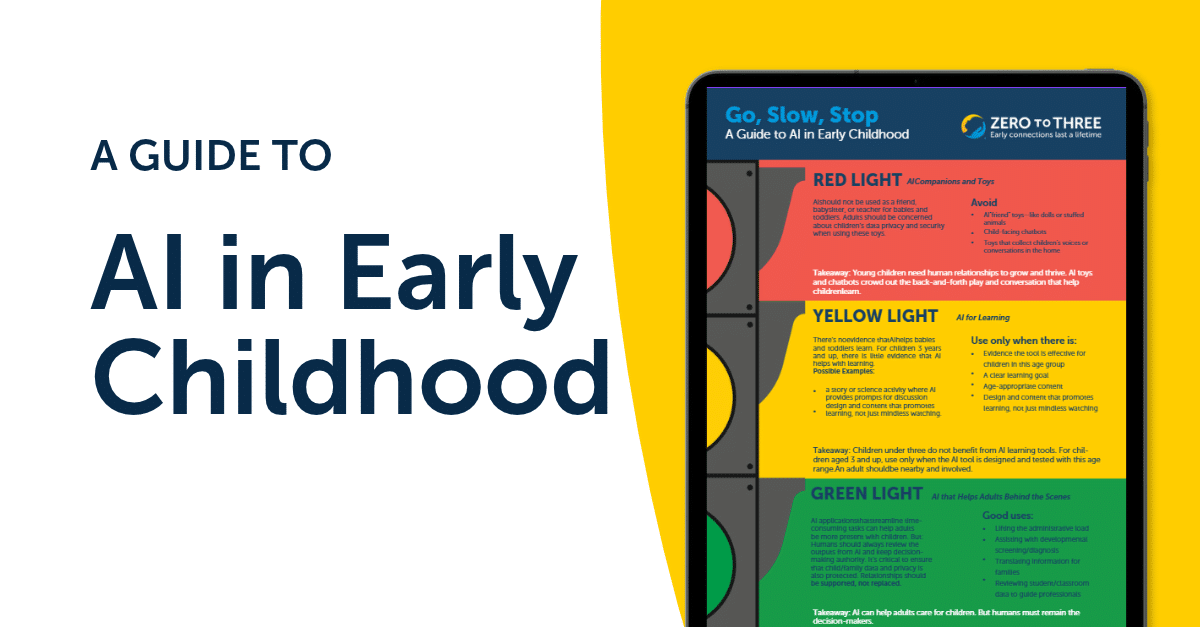
Our infographic offers a simple, traffic light approach to understanding when AI may be helpful, when to proceed with caution and when to avoid it altogether.
The guide breaks down three key areas:
- Red Light: AI Companions and Toys. Why chatbots and AI-powered toys should never replace the human relationships young children need to thrive.
- Yellow Light: AI for Learning. What to consider before introducing AI learning tools, including age-appropriateness, evidence of effectiveness and adult involvement.
- Green Light: AI That Helps Adults Behind the Scenes. How AI can support parents and professionals by reducing administrative tasks and freeing up more time for meaningful interactions with children.
The bottom line? AI has the potential to support early childhood development, but it should strengthen human relationships, never replace them.