
By most measures, we’re doing everything right. We work hard, we plan, and we invest in our kids. But we still can’t access the support we need to build the future we want for our family.
Brandon, New York
Policy Should Support Families Building a Future

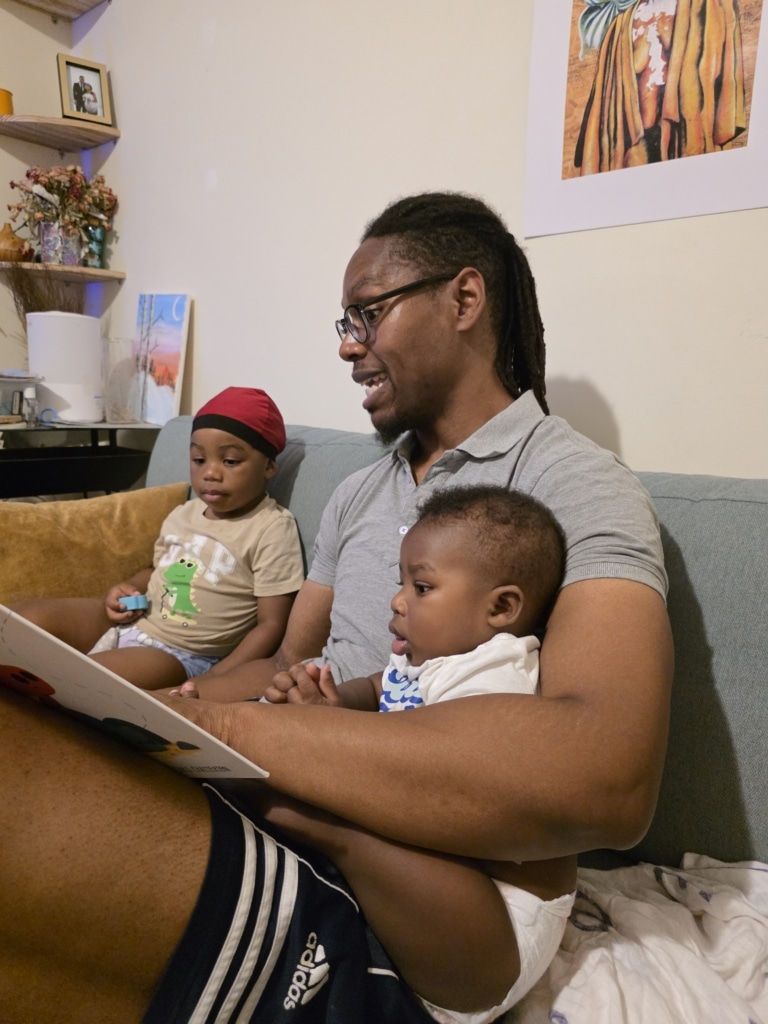
My wife, Sphinx, is a disabled Army veteran and a full-time graduate student. I work full-time in youth development in Harlem. Together, we’re raising two sons, Reign (3) and Phoenix (1).
Belief Comes at a Cost
We recently received Reign’s developmental evaluation. The evaluator explained that these are areas for growth, like fine motor skills and emotional regulation. Still, seeing words like “below average” and “poor” used to describe your child is hard to take. Reign is bright, verbal, and curious. We want to give him every opportunity to thrive.
Last year, we stretched to pay $18,500 for a high-quality early learning program for him, just two days a week. It was a screen-free environment with sign language and a strong, intentional curriculum, and it made a difference. Reign was signing before he could speak. He was engaged and thriving.
On the Cusp of Support
We can’t afford to do the same for Phoenix. He’s with a babysitter we trust, but the environment is different, and we’re concerned about the potential impact on his development at this stage.
We applied for child care assistance, but didn’t qualify. If my wife were working instead of pursuing her degree, or if we weren’t a two-parent household, we would have been eligible.
Because we’re trying to build stability the right way, we fall through the cracks.
Early Support Lasts a Lifetime
In my job, I see what happens when children don’t get early support—when families are left to figure it out on their own, and opportunities begin to slip away. I know how much these early years matter.
Families like mine aren’t the exception. We’re working, making responsible choices, and trying to build something better for our kids.
We shouldn’t be shut out because of it.
Believing in babies means building systems that enable all families to thrive.
Other Stories

I Never Thought It Would Be Me
Read the Story
The Space Between Concern and Qualification
Read the Story
We Know What Families Need, But Policies Still Fall Short
Read the Story
Helping Every Keiki Shine
Read the Story
From Grief to Growth
Read the Story
Where Care Extends Beyond the Checkup
Read the Story
Breathing Again: How Child Care Helped My Family Move Forward
Read the Story
Raising Mason, Raising My Voice
Read the Story
Teaching Safety Before Fear
Read the Story
Time to Heal Is Time to Thrive
Read the Story
A Journey I Never Expected to Walk Alone
Read the Story