
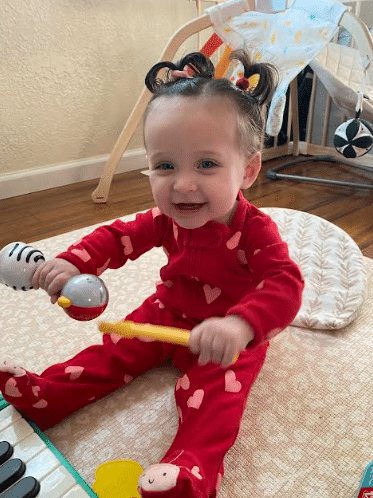
When my daughter Isla was around 11 months old, I became concerned about her physical development.
Bry, Colorado
The Space Between Concern and Qualification

She was not yet pulling herself up and overall seemed to be reaching gross motor milestones later than expected. Because of my professional background, I trusted my instincts and referred her to Early Intervention.
She did not qualify.
As an early childhood special education professional in rural Colorado, I spent years helping families navigate Early Intervention and special education systems. I understood the eligibility requirements. I knew the language. I knew how to advocate.
And still, my own family fell into the gap.
Waiting in the Gray Area
I remember leaving that process feeling conflicted. On paper, she did not meet the criteria. But as both a professional and a parent, I knew something still warranted support.
Her physician recommended we wait until 15 months and re-evaluate if she was not walking by then. So we waited.
And this is where so many families find themselves: waiting in the gray area between concern and qualification.
Wait and see.
Wait until preschool.
Wait until kindergarten.
Wait until the delays become more obvious.
Wait until a child falls far enough behind.
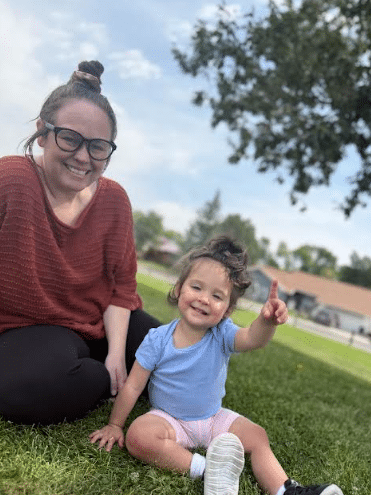
At 15 months, Isla was referred again. This time, she qualified for Early Intervention services and began receiving physical therapy. Within less than a year, she made tremendous progress and we were able to remove physical therapy from her service plan because her motor skills had improved so significantly.
I often think about how easily our story could have unfolded differently.
Believing in Babies Before They Qualify
What if we had ignored our instincts after the first evaluation? What if we had not known how to navigate the system? What if we could not take time off work for appointments or evaluations?
Even as someone who professionally understood the system, the experience was emotionally difficult. It is hard to be told your concerns are not yet “significant enough,” especially when you are watching your child struggle in real time.
And many families do not have the knowledge, flexibility, or resources to keep pushing.
The problem is that child development does not happen in neat categories. Many children exist in the gray area between thriving and qualifying. And for families living in rural communities, that gray area can feel enormous.
The Families Who Are Overlooked
In theory, families whose children do not qualify for services can seek outside support. In practice, those supports are often inaccessible or nonexistent. In many rural areas, there are few therapy providers, long waitlists, limited childcare options, and significant transportation barriers. Parents may need to drive hours for evaluations or pay out of pocket for services they cannot afford.
So families are often left carrying the burden alone. By the time many children finally qualify for support, families have often spent years carrying stress, confusion, and self-doubt. Parents begin questioning their instincts. Teachers feel unsupported. Children internalize frustration long before they have the language to explain it.
Some of the children most likely to fall into this gap are also the ones most likely to be
misunderstood.
Support Before the Crisis
A child may have strong language skills but become overwhelmed in noisy environments. Another may appear academically advanced while struggling with emotional regulation or sensory processing. Some children mask their challenges well enough to stay below the threshold for services while still facing daily difficulties.
At the same time, families are navigating these concerns amid childcare shortages, rising costs of living, increasing social isolation, and the pressures of modern parenting. Many are doing their best with limited support. Yet when developmental concerns arise, the burden often falls on parents to research, advocate, coordinate appointments, and bridge the gap between “not qualifying” and getting the help their child needs.
Creating Systems of Belief
Not every child in the gray area needs intensive therapy. But many families would benefit from support long before a child meets formal eligibility criteria. Parent coaching, developmental guidance, inclusive playgroups, and early childhood mental health supports can make an enormous difference.
Believing in babies means recognizing that children do not suddenly become worthy of support once a score crosses a threshold.
I do not believe early intervention systems are failing because providers do not care. Most professionals are doing their best within systems strained by limited resources and growing demand. But when support only becomes available once struggles become severe enough, we are not practicing prevention. We are practicing delayed response.
We can build systems that respond earlier, support families sooner, and ensure parents do not have to wait for things to get worse before anyone is allowed to help.
Other Stories

I Never Thought It Would Be Me
Read the Story
We Know What Families Need, But Policies Still Fall Short
Read the Story
Helping Every Keiki Shine
Read the Story
From Grief to Growth
Read the Story
Where Care Extends Beyond the Checkup
Read the Story
Breathing Again: How Child Care Helped My Family Move Forward
Read the Story
Raising Mason, Raising My Voice
Read the Story
Teaching Safety Before Fear
Read the Story
Time to Heal Is Time to Thrive
Read the Story
A Journey I Never Expected to Walk Alone
Read the Story
Policy Should Support Families Building a Future
Read the Story