Home/Our Work/Pediatrics Supporting Parents/Ready, Resilient, Rising
Pediatrics Supporting Parents Proof Point Community: Bay Area, CA

Ready, Resilient and Rising!

This Proof Point Community is shifting the culture of pediatrics and early childhood systems through innovations that partner authentically with families.

About

The Bay Area Proof Point Community (PPC) is comprised of the University of California, San Francisco (UCSF) Ready, Resilient and Rising! (R3!) team and community partner, Safe & Sound. R3! serves young children and families in the Bay Area through a large cross-bay pediatric system anchored in Oakland and San Francisco. Their work shifts practice culture by integrating parent voice to create systems that are more responsive to families’ needs, and support children ages 0 to 3 and the pediatric practitioners who care for them. 

The Early Relational Health (ERH) Curriculum Team co-designed a teaching series for pediatric residents. Their approach includes embedding parent-created videos and relevant vignettes to ensure family voice is at the center of resident training. This work highlights parent perspectives and partnership while promoting mutual empathy between families and clinicians, improving outcomes for everyone. 

Through the Bay Area Toxic Stress Network Improvement Collaborative (TONIC), practitioners, staff, and families co-lead cross-sector efforts to coordinate care, offer systems navigation to improve social drivers of health, and reduce toxic stress in families with children ages 0-5.  

View the Bay Area – Early Relational Health Curriculum explainer video to learn more.  

View the Bay Area – TONIC explainer video to learn more. 

Innovations

The Bay Area’s innovations integrate family expertise into both pediatric care systems and resident training to strengthen early relational health, accountability, and family well-being. 
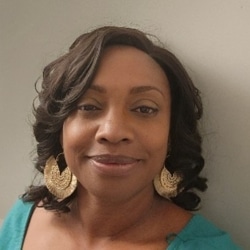
Bay Area Toxic Stress Network Improvement Collaborative (TONIC) 

UCSF Center for Child and Community Health and Partners 

TONIC brings together cross-sector leaders to transform care systems so young children and their families can thrive. They are guided and held accountable by its Family Accountability Board (FAB), a group of caregivers with knowledge of Medi-Cal and the child welfare system. TONIC supports the integration of lived expertise in the utilization of Medicaid benefits, such as dyadic care and Cal-AIM Enhanced Care Management. In collaboration with the University of California, San Francisco (UCSF) Center for Advancing Dyadic Care in Pediatrics, this team developed tools that providers and clinic systems may use to support their use of the dyadic benefit. 

Elevating Parent Perspectives in Early Relational Health Training and Practice 

UCSF Benioff Children’s Hospital Oakland and Affiliated Federally Qualified Health Center 

This innovation seeks to strengthen early relational health by reshaping how pediatric residents learn to engage and partner with families. Through experiential, parent-led, and reflective teaching strategies, residents practice skills grounded in mutual respect, empathy, and shared purpose. The goal is to foster a generation of pediatricians who enter clinical practice with a deep appreciation for the power of relationship-centered care. By centering family leadership in the design and delivery of medical education, this initiative aims to shift the power dynamics of pediatric care—creating a culture where partnership and co-learning between families and providers is the norm. 

Family Partnership and Co-creation

Families bring essential expertise about what builds trust, where systems break down, and how care is experienced. Placing those with this expertise in leadership roles changes what is designed and how it is implemented.

This PPC has invested in family leadership that reinforces caregivers and providers as partners and co-designers of pediatric systems and resident training. Centering family experience alongside clinical knowledge supports the development of pediatric care systems that are more responsive and sustainable.  

What distinguishes this work is its commitment to shared power, including in areas where power is rarely shared, such as governance and budget decisions. Family representation is treated as essential, not optional, and leadership structures are designed to reflect both family and provider voices. While this approach has required more effort and challenged traditional ways of working, it also demonstrated what is possible: a culture shift where families are engaged as equal partners. This team’s experience shows that when families who have been most affected by systems are invited to co-create solutions, the work becomes more relevant and more likely to lead to lasting change.  

Hope Williams-Burt

Family Leader

“What’s different about this work is sharing power, even in the budget, and holding both families and providers accountable to leadership that truly represents every voice.”

Strategies for Making the Case for Family Partnership and Co-creation

Co-creation Definition

Co-creation is a journey built on trust, respect, and shared power. Its core is rooted in creating and sustaining safe and welcoming spaces where unique perspectives and experiences that each partner brings are honored and valued. It encourages open dialogue, mutual support, and joint decision-making to create solutions that truly meet the needs of the community and families involved. 

Enabling Family Partnership

This PPC has Family Accountability Boards (FABs) that support the R3! goals of the redesign of early childhood systems of care and capacity building through early relational health curriculum development. The FAB consists of 14 members including monolingual English and Spanish speakers.

Honoring Lived Experience

Dedicated funding is allocated for family partnership activities. FAB members and those on the Governance Body are compensated at $125 per hour. To facilitate access, food, transportation costs, and childcare are provided for in-person meetings and a monthly barrier removal stipend is given for virtual meetings.

Making the Case

The FABs strengthen family partnership in pediatrics by co-designing early relational health training for future pediatricians and supporting local implementation of Medicaid policies for young children and families. Through iterative co-design, teams shift power and culture while producing clinical resources, policy guidance, and trainings grounded in family expertise.

Sustainability Efforts

View Bay Area – ERH Curriculum case for investment video. 

R3! is looking to train more parent leaders, expand their resident training program and engage providers locally and nationally to shift culture in the pediatric field at large.  

Through this [relational health] teaching series [for pediatric residents], we’re impacting approximately 10,000 children, 25% who are under the age of five.

View Bay Area – TONIC case for investment video.

TONIC is seeking support to sustain its multi-sector collective work to connect eligible young children and their families to Medicaid services that they want and need.  

TONIC provides an opportunity to disentangle our system web and connect children and their families to much needed resources.

Bay Area – TONIC Resources

This paper aims to provide an overview of families with children aged 0–5 in Family Maintenance (FM) placements in San Francisco City and County and explore opportunities to better address the needs of these families. 

Download Now

This paper describes how ECM, a new benefit available to high-risk Medi-Cal recipients, might look like for Family Maintenance cases involving children aged 0–5 in San Francisco.

This article on Safe & Sound’s website is about the New Opportunities with Enhanced Care Management paper and the importance of its publication. 

This website hosts a collection of information, resources, and quick links about ECM. 

These resources will help providers, counties, and managed care plans better understand how systems can share information responsibly and improve care coordination related to Medi-Cal services for families in child welfare. 

This calculator allows providers, clinic administrators, Managed Care Plans, and other partners to input their own real-time capacity (staffing, potential billables, etc.) to implement an early childhood dyadic model of care in their own clinic or care plan settings by utilizing the California dyadic services benefit.  

Bay Area – ERH Curriculum Resources

This paper shares about the Black Love Opportunity and Outcome Improvement in Medicine (BLOOM) clinic at UCSF Benioff Children’s Hospital and its wraparound pediatric primary services to address racial inequities, there remains a significant gap in developing and evaluating such clinics. 

learn more

Download

Meet the Bay Area Team

Charlene Choi

Charlene Choi, JD

Principal Policy Analyst for TONIC 

Charleneis passionate about humanizing systems through local family and community expertise. In addition to her role with TONIC at the UCSF School of Medicine she has recently rejoined the leadership team at KCS Health, a federally qualified health center in Southern California. Previously, she held leadership and policy roles at UCLA and statewide initiatives advancing child and family well-being. Outside of work, Charlene is an amateur ceramicist and is always happy to chat about all things wheel-throwing.  
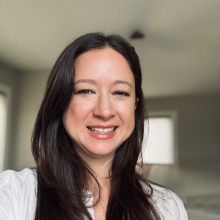
Ashley new photo

Ashley Downend

Senior Program Manager, Community Systems & Partnerships Safe & Sound

Ashley leads cross-sector initiatives to build community pathways of support in San Francisco so that all families thrive. She facilitates the Family Services Alliance, a coalition of family support organizations and forges meaningful connections between them and key partners. A passionate advocate, Ashley brings experience as a foster, biological and adoptive parent navigating multiple systems. When she isn’t working, Ashley can be found carpooling her four children to their many activities or experimenting in the kitchen. 
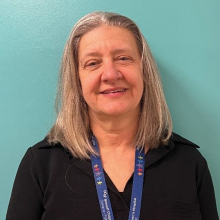
Diane Halberg photo

Diane Halberg, MD

Pediatrician and Professor of Clinical Pediatrics 

Dr. Halberg provides care at UCSF Benioff Children’s Hospital, aFederally Qualified Health Center.She is the director of the Community, Advocacy & Primary Care rotation and the co-director of the outpatient Mental Health rotation. Dr Halberg’s career has focused on educating future pediatricians as well as caring for children with complex needs.At home, she and her husband race to finish the New York Times crossword puzzle, a weekly contest she cheerfully admits she usually does not win.  
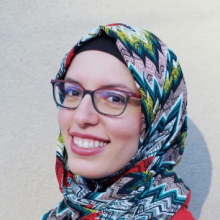
Sarah Ismail photo

Sarah Ismail, MPH

Program Manager, Ready, Resilient and Rising!

Sarah has a background as a public health consultant advising startups, nonprofits, and governments on how to scale their projects to serve more people sustainably. She has also been an award-winning lecturer at her alma mater, University of California, Berkeley, where she received her Master of Public Health in Maternal and Child Health. From growing up in Egypt with a view of the pyramids to visiting nearly 40 countries, Sarah has always had a passion for exploring the world.  
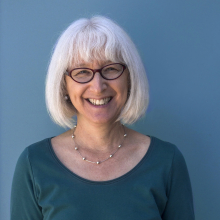
Barbara Ivins photo

Barbara Ivins, PhD

Program Manager and Clinical Director

Barbara’s work at EIS focuses on multidisciplinary early intervention and early childhood mental health services for young children with medical, developmental, and socio-emotional risks, including trauma. As a psychologist and early childhood mental health practitioner, Barbara emphasizes parents as partners and views early relationships as foundational to healthy development. For over 30 years, she has provided direct services, program development, training, supervision, and consultation in Northern California. Outside of work, Barbara enjoys reading science fiction, music of all kinds, and spending time in nature.
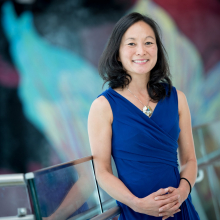
Anda Kuo, MD
Pediatrician and professor at UCSF School of Medicine

Anda Kuo, MD

Professor of Pediatrics and Provider Lead

Dr. Kuo practices at Zuckerberg San Francisco General Hospital and serves as Vice Chief of Strategy and Partnerships. She is co-director of the UCSF Center for Child and Community Health and founder of TONIC and the UCSF-YMCA SF Transforming Research as Usual for Equity partnership. She is the inaugural program director of the UCSF PLUS (Pediatric Leaders Advancing Health Equity) Training program. Dr. Kuo raised three children in San Francisco and draws inspiration from her mother, a post-World War II immigrant who was one of only three women in her medical school class in 1960.  
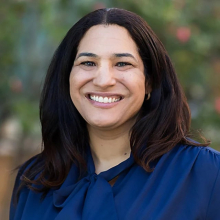
Dayna Long

Dayna Long, MD

Professor of Clinical Pediatrics and Co-director
Center for Child and Community Health

Dr. Long co-leads the Ready, Resilient and Rising! project with Dr. Kuo. She is a primary care pediatrician whose work emphasizes early relational health and team-based models, and focuses on childhood adversity, toxic stress, and resilience-promoting interventions to advance health equity. She has shaped national approaches to trauma-informed pediatric care and contributed to advancing health equity for children and families. Outside of work, she loves spending time with her three sons and massive Great Dane. 
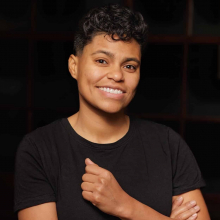
Brenda photo

Brenda Miles

Strategic Partnerships & Policy Coordinator, Safe & Sound

Brenda began her work with Safe & Sound in 2022 and believes team synchronicity is important for envisioning outcomes and achieving goals. She approaches her work with the desire for collaborators to shed pretenses often constructed by divisions of race, class, and gender. Brenda enjoys cycling, hiking, long drives, small towns, big cities, and supporting small businesses, whether it be coffee shops, burger joints, or artisans. Brenda’s greatest accomplishment is probably being the “Fun Aunt” to her nieces and nephews. 
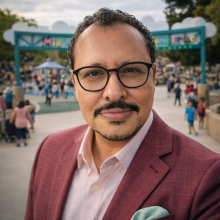
Daniel Vasquez

Daniel Vásquez

Family Partner & Case Manager

Daniel is a father and advocate of family-centered systems change. Drawing from lived experience raising a daughter with complex needs, he supports institutions to move beyond listening to truly sharing power. He co-leads the FAB, positioning family expertise at the center of healthcare and child welfare reform. Through his work at UCSF Benioff Children’s Hospital, Daniel advances equity, accountability, and leadership rooted in community voice. He finds his greatest joy in fatherhood and creating milestones with his family of seven. 
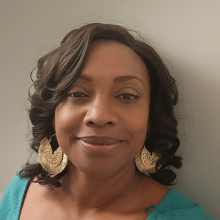
Hope Williams-Burt photo

Hope Williams-Burt

Community Relationship Development Consultant

Hope leads the FAB for Ready, Resilient and Rising! and the Benioff Oakland Children’s Hospital BLOOM initiative. She has served in leadership roles focused on pre-term birth, maternal health, and ERH. Grounded in community-driven practice, Hope advances efforts that elevate family expertise. She founded Residents Supporting Community and has supported strategic planning for Community Advisory Boards nationwide. Hope is also a proud wife, mother, LaLa to her grandson, and the party planner who knows how to throw a memorable celebration.  

Bay Area Skyline Image

Maoya Alqassari

Program Coordinator, UCSF Benioff Children's Hospital Oakland

Maoya is dedicated to her role supporting families, providers, and research teams. She has led community-based initiatives, coordinated clinical studies, and connected families to essential resources. She thrives in collaborative environments and is passionate about improving pediatric care, strengthening community partnerships, and creating meaningful, family-centered impact. Outside of work, she’s always on the hunt for the perfect iced coffee and loves discovering new coffee shops around the Bay. 
Contact

To connect with the East Bay Area team please email Hope Williams-Burt ([email protected]) or Diane Halberg ([email protected]) and to connect with the West Bay Area team please email Anda Kuo at [email protected] or [email protected]