Home/Our Work/Pediatrics Supporting Parents/First Year Families Pediatrics Northwest in Pierce County, WA
Pediatrics Supporting Parents Proof Point Community: Pierce County, WA

First Year Families
Pediatrics Northwest

This Proof Point Community has reimagined pediatric primary care to reflect the realities of families’ lives.

About

Pediatrics Northwest is proud to demonstrate that family-partnered, team-based pediatric care is not only possible but practical and scalable. Based in Tacoma and partnering closely with the Washington Chapter of the American Academy of Pediatrics (WCAAP) and its First Year Families Committee, this team serves approximately 40,000 families through a model integrating family partnership, early relational health, integrated behavioral health, and Community Health Workers into everyday care.   

At this Proof Point Community (PPC), workflows are redesigned with family input while learning collaboratives connect clinics across the state to reduce isolation and share practical solutions. By pairing relational, upstream care with policy, advocacy and scalable infrastructure, Pierce County First Year Families shows that family-centered, team-based pediatric care is not only aspirational but also achievable, sustainable, and ready to be replicated. 

View Pierce Countys explainer video to learn more. 

Innovations

Pierce County used Pediatrics Supporting Parents (PSP) funds and other support to co-create and test approaches to enhance early relational health (ERH) in pediatric settings. View these innovative approaches below.  

Embedding Community Health Workers 

Community Health Workers (CHWs) embedded into pediatric primary care can address unmet social needs and improve relational health. CHWs journey with families according to their expressed needs, rather than a timeline determined by the practice. They assess unmet social health needs and are introduced as a member of the care team from the beginning at the newborn visit. 

Family Partnership in Pediatric Primary Care 

This innovation centers on patient and family-centered care, bringing family perspectives directly into the planning, delivery, and evaluation of healthcare. This team is intentionally reimagining the pediatric medical home as a co-designed system with the people it serves. This model is built on perspective-taking, curiosity, and self-reflection, inviting families to help shape the culture and practices of care teams. The result is a deeply relational approach to pediatric primary care that elevates trust, empathy, and partnership as drivers of quality and safety. 

A small group of medical professionals, led by a doctor, are participating in team training as they sit around a table together. They are each dressed professionally and are focused on the meeting.

Reflective Practice with Pediatricians 

This innovation integrates reflective practice into pediatric primary care through the evidence-based Promoting First Relationships (PFR) curriculum. Pediatrics Northwest trains all clinical staff, including pediatricians, Advanced Registered Nurse Practitioners, nurses, integrated therapists, psychiatric providers, and Community Health Workers in reflective, relationship-based approaches. Reflective practice cultivates curiosity, self-awareness, and thoughtful engagement with families, strengthening clinician empathy and connection.  

Family Partnership and Co-creation

This PPC has learned that meaningful partnership between parents and pediatrics requires moving beyond listening to families and toward trusting them as co-designers and leaders.

At this PPC, family leaders shape care transformation, policies, workflows, and screening practices alongside clinicians and staff. What is different about this work is that family partnership is ongoing, compensated, and tied to decisions and implementation.

Engaging families in this way matters because they are experts in their children’s lives and are often the first to identify barriers, stressors, and solutions that systems overlook. When families help design care, trust increases, care becomes more responsive, provider burnout decreases, and outcomes improve for children and parents alike. 

Shayla Collins, Family Leader

Shayla Collins

Family Leader

“Family partnership is not about being invited to comment after decisions are made. It is about being trusted as a leader from the beginning. When families are truly included, care becomes more human, more effective, and more sustainable for everyone.” 

Strategies for Making the Case for Family Partnership and Co-creation

Co-creation Definition

Co-creation is a relational, community-driven process rooted in shared ownership and mutual respect.

Enabling Family Partnership

This PPC's family partnership work is focused on co-created workflows and processes at the medical home and beyond. Their team has implemented community-based family partnering and hosts quarterly family nights and smaller ad hoc groups in between.

Honoring Lived Experience

At the start of the project, the Family Leader on the Governance Body was paid $125 per hour for governance work and $50 per hour for community work. Due to administrative burden, this was later replaced with an agreed-upon $2,700 monthly stipend to support her governance and local responsibilities. Other Family Leaders received $50 per hour for planning and attending family nights. The PPC ensured convenient meeting times, meals, and kid-friendly activities were available.

Making the Case

The team has shifted to strengths-based, family-centered practices with new ERH and Social Determinants of Health (SDOH) screening tools shaped by family input. Feedback has improved missed appointment policies, strengthened data capacity, and supported efforts to secure stable funding for family engagement, including family leader compensation and family nights. They are also exploring co-presenting with family partners, embedding them on key committees, and sharing research on the value of family partnership.

Sustainability Efforts

View Pierce County’s case for investment video.  

This PPC is seeking a coalition to scale its integrated Community Support Worker (CHW) initiative, which both improves pediatricians’ capacity and positively shifts families’ trajectories. 

Community health workers are vital for successful connection to mental health resources.

Resources

This issue brief outlines the Pierce County PPC’s efforts to sustainably fund Community Health Workers (CHWs) within pediatric primary care to promote physical and behavioral health integration. Drawing on lessons from Pediatrics Northwest’s implementation experience, it highlights remaining barriers—including billing limitations—and offers actionable strategies to ensure the growth and sustainability of the CHW workforce to advance whole‑child, integrated care across diverse clinical and community settings.

Download Now

This episode features the brilliant and passionate Dr. Mary Ann Woodruff and Rachel Lettieri from Pediatrics Northwest. They have piloted a program within their practice that is a great example of the impact of treating families. They have embedded community health workers within their practice, and are seeing fantastic results.

Chaudhary, J. (Host). (2025, August 11). Putting Families at the Center (No. 4) [Audio podcast episode]. In Favorable Thriving Conditions.

The Washington Chapter of the American Academy of Pediatrics (WCAAP) has been a critical partner in this work. Please visit their website for additional information.

Pediatrics Northwest’s Dr. Mary Ann Woodruff and Rachel Lettieri were part of the Innovation Hub, a fellowship model within Thrive Center for Children, Families, and Communities at Georgetown University featured in this article.  


Aziz, Afdhel. “How Georgetown’s Thrive Center Is Scaling Innovation In Child And Family Mental Health.” Forbes21 January 2026.

Dr. Mary Ann Woodruff is featured and shares about Pediatrics Northwest’s partnership with HopeSparks Family Services, a behavioral health and family services provider, and the unique approach that allows them to diagnose and treat behavioral health concerns in children before they reach crisis levels.  


Vassar, C. (Host). (2025, January 23). Reimagining Children’s Health: Insights on Whole Child Health (Part 2 of 2) (No. 117) [Audio podcast episode]. In Well Beyond Medicine. Nemours Children’s Health.

Meet the Pierce County Team

Shayla Collins, Family Leader

Shayla Collins

Family Leader
PSP Initiative

Shayla is a parent leader, advocate, and nationally recognized voice in family partnership and relational pediatrics. At Pierce County First Year Families, she serves as a trusted co-designer and connector, embedded in care transformation, governance, and statewide learning efforts. Drawing on lived experience, Shayla advances models that center family leadership, trust, and early relational health, and she works across communities, systems, and policy spaces to strengthen pediatric care for children and families. 

Rachel-Lettieri

Rachel Lettieri

Director of Care Transformation
Pediatrics Northwest
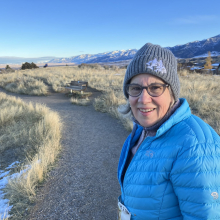
Rachel is passionate about improving child and family health through systems change and strong partnerships among families, communities, and pediatric care teams. Her work centers on early relational health, integrating community health workers, and building equitable, human-centered systems. Guided by the belief that families are experts in their own lives, she brings thoughtful, strategic leadership to her work. Outside of work, she enjoys traveling, exploring local bakeries, and spending time with her husband and two children, Adam and Marcella.

Mary Ann Woodruff

Mary Ann Woodruff, MD, FAAP

Medical Director of Care Transformation
Pediatrics Northwest

Mary Ann is a general pediatrician who has partnered with children and families at Pediatrics Northwest since 1989. Her work advances integrated, family-centered teams of care. Guided by accompaniment and shared learning, she works to turn vision into action beyond clinic walls. Mary Ann also serves as Washington Medical Director for Reach Out and Read Northwest. Outside of work, she enjoys a good read and walking with her family—often alongside seven shiba inu dogs. Mary Ann can be reached at [email protected]  

Contact

pediatrics-northwest-logo
To connect with the Pediatrics Northwest team, please email Rachel Lettieri at [email protected].