Governance


About

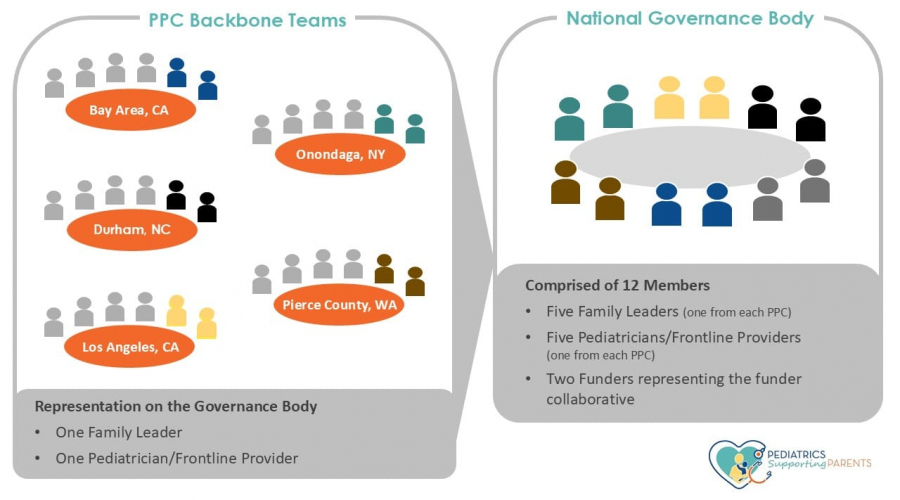
Pediatrics Supporting Parents (PSP) initially launched as a funder collaborative but intentionally evolved into a field-led initiative guided by families and communities. Through investments in five communities and a national Learning Community, parents, pediatricians, community leaders, and funders now co-create strategy, priorities, and investments, ensuring practice change in well-child pediatric care is rooted in lived experience and community wisdom. Grounded in racial health equity and trust-based philanthropy, PSP established a shared Governance Structure and a 12-member Governing Body—including five family leaders—to steward decisions about funding, strategy, and systems change. This shift reflects a commitment to ceding power, investing in meaningful partnership, and centering families so solutions developed locally can transform care for all children and families. 

View the video highlighting governance to learn more.

The Journey

Pediatrics Supporting Parents began by exploring how pediatric well-child visits could better support young children’s social and emotional development and early relational health. The work focused on identifying effective practices and understanding system-level barriers such as workforce training, reimbursement, and data systems. Ultimately, the work revealed that lasting change required deeper community partnership and shared ownership. 

PSP entered its second phase and shifted to community-based implementation in five Proof Point Communities, centering families, providers, and local partners in co-design and decision-making. Through a shared governance structure and national Learning Community, Phase 2 focuses on demonstrating what it takes to transform pediatric practice at the community level and generate lessons to inform broader systems change. 

Funder Collaborative

Pediatrics Supporting Parents’ philanthropic partners first came together in March 2017 with an ambitious goal: to move beyond incremental approaches to supporting young children’s development and instead collectively invest in bold ideas capable of producing meaningful impact. The funder collaborative members are committed to the initiative and approach co-creation with humility, a learning mindset, trust, and a unified voice. They prioritize relationship-building and breaking down silos, remaining adaptive over time while staying focused on the ultimate aim of supporting children’s social and emotional development and strengthening nurturing parent-child relationships. 

Governance Body

PSP uses a shared-power governance model where family leaders, frontline providers, and funders collectively steward strategy, funding, and systems-change efforts to advance early relational health and social-emotional development for children ages 0-3. Together, the group engages in structured meetings and makes decisions by consensus. The model intentionally requires participation and addresses power dynamics so families are true co-leaders in shaping the initiative’s direction. 

Governance Strategies

Focus

The group sets direction, allocates resources, and steers national and local strategy with family voice central to process and decisions.

Membership

A 12-member Governing Body comprised of parents, practitioners, and funders—with parents structurally embedded, not optional.

Meeting Structure

Structured but flexible monthly virtual meetings designed to enable preparation, shared leadership, and real participation.

Decision Making

The group employs a structured consensus process and utilizes the Gradients of Agreement to identify levels of support and areas of concern that need to be addressed to reach consensus.

Participation Support

Participation is intentionally resourced so all members, especially family leaders, can engage meaningfully, including hourly compensation, childcare, transportation, and other logistical supports.

Key Learnings and Impacts

When family voice is embedded within governance structures, shared goals are shaped by the perspectives of those most affected and more informed decisions are made. 

Consensus-based decision-making centered on mutual respect and shared understanding ensures that every member is valued and avoids majority-rule “steamrolling.” 

Transparency helps build trust and deepen engagement. Clear roles, a strong backbone organization, supports for family engagement, and an open budget allocation process across all PPCs fostered connection, shared understanding, and collective investment in one another’s success. 

Resources

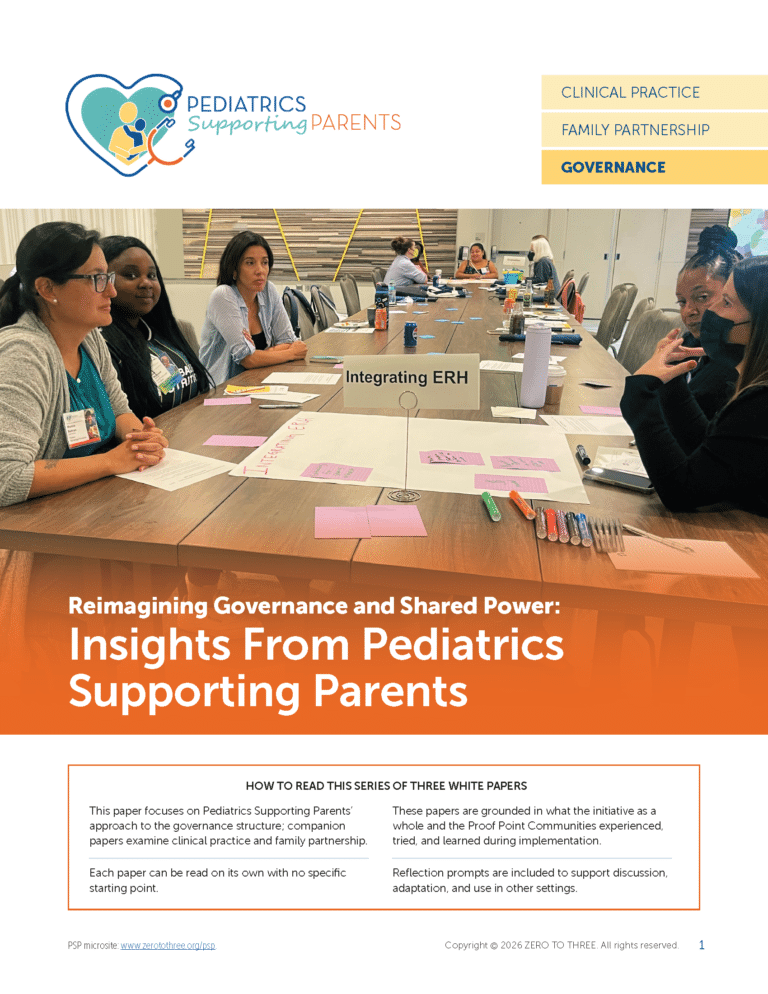
This document outlines how the PSP initiative’s governing body is structured and operates to equitably share power, make decisions, and resource participation while advancing early relational health and social-emotional development for young children. Included is an overview of the Gradients of Agreement, a tool to facilitate the decision-making process.  

Download Now

This Health Affairs article shares experiences from families and providers and explores how PSP addresses structural barriers in pediatrics to transform children’s healthcare.

Learn More

Contact

To connect with the funder collaborative, email India Alarcon at [email protected] 
Zero To Three is a national early childhood nonprofit whose mission is to give all babies a strong start in life.
To connect with the Pediatrics Supporting Parents team, email Kimberly Bradley at [email protected].