Family Partnership


About

Family partnership is foundational to Pediatrics Supporting Parents (PSP) and is deeply embedded at both the community and governance levels. At the five Proof Point Communities (PPC), families serve as paid leaders and co-creators, working alongside pediatric teams and community partners to set priorities, strengthen early relational health, reimagine the well-child visit, and test the initiative’s 14 common practices.

At the governance level, families are embedded as co-leaders in formal decision-making, ensuring their lived experience informs policy, strategy, and long-term systems change. Through shared ownership, transparent communication, and sustained support, this integrated partnership model strengthens accountability and keeps child- and family-centered values at the forefront of local and national efforts.  

View the video highlighting family partnership to learn more. 

The Journey

Over the past seven years, PSP has engaged nearly 40 family leaders as integral partners in designing, implementing, and evaluating systems-change efforts to improve early childhood social and emotional development. Their lived expertise has shaped common practices, care delivery, and policies across PPCs and governance structures, ensuring the work remains grounded in the realities and cultural perspectives of families. By embedding family leaders in planning, advisory activities, and collaborative learning, PSP has built a model where families serve not just as participants but as co-architects of systemic change  

Family Leader Development

Family leader development is central to sustaining meaningful engagement across the PPCs. Family Voices paired systems‑level capacity building with direct, year‑round support for leaders, providing monthly meetings for peer learning, technical assistance, and governance preparation, alongside individualized support for budgeting, invoicing, and navigating organizational processes. A comprehensive training series covering the following topics helped family leaders advance their leadership trajectory and sustain ongoing roles in early childhood and family engagement: 

  • Creating Your Own Story to craft narratives for connection and advocacy 
  • Branding Yourself as a Family Leader & Advocate with tools to define strengths and build online presence 
  • Creating a Career Path and Building Your Resume to translate experiences into compelling resumes 
  • Assess Your Leadership Skills and Skills and Capabilities Inventory to reflect on competencies and growth 
  • Navigating the Family Engagement Profession for practical field guidance 
  • Family Leader Capacity-Building Checklist and Practice Plan for ongoing reflection, professionalism, and self-care 
  • Ongoing Mentorship for Your Career Path to build durable mentorship relationships 

Together, these structures: cohort support, one-on-one assistance, and a sequenced training curriculum ensure family leaders are informed, compensated, and prepared to sustain their impact well beyond the initiative. 

To learn more about these offerings, please visit the Family Voices website. 

Family Leaders Facilitating Attuned Interactions (FAN)

Family partnership showed up at the broader initiative-wide level too, through the adaptation of Facilitating Attuned Interactions (FAN). Created at Erikson Institute, the original FAN tool and training are built on the idea that people need to feel connected and understood before they are ready to try new things. FAN is a communication and mindfulness tool that helps practitioners tune into the feelings of both parties in an interaction so they can respond with empathy and in ways that fit the situation.

This adapted version, the Family Leaders FAN, was co-created by PSP family leaders, Family Voices, and an Erikson Institute team led by Linda Gilkerson, PhD. It supports family leaders entering systems-change work and engaging in planning, decision-making, and workflow changes that many haven’t previously navigated.

The goal: family leaders recognize and respond effectively to others’ communication cues while respecting their own experience. This shift was reframed from FAN’s “mindful self-regulation” into a question: How can I be settled within myself to allow myself to respond the way I need to? The new version will use a peer-to-peer training model to build confidence for family leaders as they help families thrive, center healing for themselves and their communities, and contribute to broader systems change.

Power Sharing

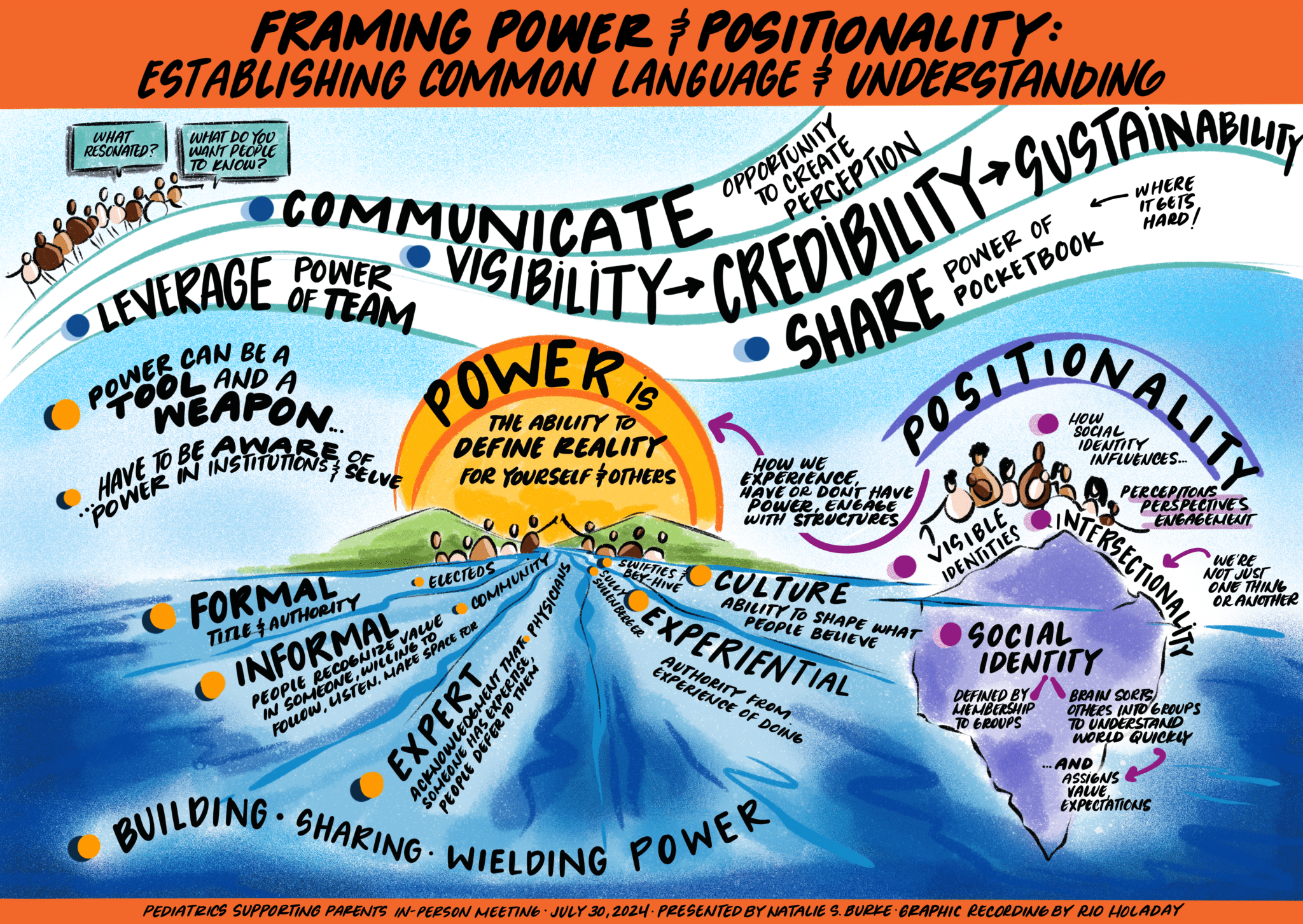
Power sharing is a core element of meaningful co‑creation for PSP because it ensures that familiesespecially those historically marginalized within healthcare—serve as true partners in shaping decisions, policies, and practices. This power sharing is embedded in the Governance Body, bringing families into strategic oversight, priority-setting, and policy approval with shared ownership of outcomes. Co-creation within PPCs reinforces this commitment through relational, community-driven processes grounded in mutual respect and collaborative decision-making, enabling families not only to participate, but to lead in ways that strengthen early relational health and reduce health disparities  

Family Partnership Strategies

Transparency

To promote transparency, family leaders receive agendas, decision-making materials, and clear role descriptions in advance. Paired with accessible communication and structured compensation, this transparency ensures family leaders are not only "in the room" but meaningfully prepared to participate.

Power Sharing

To ensure power sharing, family leaders are voting members of the Governance Body which brings their lived expertise into the vital areas of strategic oversight, priority-setting, and policy approval so their preferences, needs, and cultural perspectives directly influence systems-level change.

Equitable Compensation

To promote equitable compensation, family leaders are paid fairly and consistently, enabling full participation in decision-making without financial strain, leading to more sustainable involvement and stronger representation of community priorities.

Capacity Building

To improve capacity building, investment in training, mentorship, and leadership opportunities help family leaders feel competent, confident, and connected. This shifts power dynamics, strengthens agency, and fosters meaningful shared decision-making.

Coaching and Support

To promote coaching and support, monthly cohort meetings, tailored one-on-one assistance, and a sequenced training curriculum are built into the framework of support for family leaders. This approach ensures they are informed, effective partners in governance and decision-making.

Key Learnings and Impacts

Trust deepens, mutual respect grows, and traditional hierarchies shift when clinicians and families recognize one another as experts and when the right structures are in place to support that recognition—ultimately benefiting babies and children. 

When families co-create as equal partners alongside clinicians and administrators, communication strategies, clinic policies, and service design evolve in meaningful and practical ways. 

Preparing and supporting family leaders is foundational to success. Meaningful participation requires training, guidance, and equitable compensation so families can confidently engage as peers alongside funders and clinicians, contributing their lived experience and expertise. Sustaining this compensation beyond grant funding remains an important and ongoing challenge for the field.

Resources

The FESAT helps organizations assess their readiness to meaningfully partner with families, guiding reflection on leadership commitment, structures, and culture to identify current readiness and outline clear next steps for building sustainable family engagement. 

LEARN MORE

This training and complementary policy guide and engagement template equip participants with the knowledge and strategies to advocate for meaningful, sustainable family engagement, exploring the benefits of strong partnerships, communicating their value, and building stakeholder support. These tools provide a clear framework that integrates family perspectives, needs, and circumstances to build structured, sustainable policies that reflect true partnership. 

This template guides teams in developing role/job descriptions to recruit family leaders for groups, projects, or initiatives. A strong role description fosters shared purpose and belonging while helping family leaders understand expectations, and this template outlines key elements. 

Contact

To connect with Family Voices, email Allysa Ware at anware@familyvoices.org
Zero To Three is a national early childhood nonprofit whose mission is to give all babies a strong start in life.
To connect with the Pediatrics Supporting Parents team, email Kimberly Bradley at [email protected].