Home/Our Work/Pediatrics Supporting Parents/THRIVE Family Health & Education Center
Pediatrics Supporting Parents Proof Point Community: Durham, NC
THRIVE Family Health & Education Center
This Proof Point Community listens deeply to families and works alongside them, turning innovation into everyday practice and relationships into better care.

About

As a nonprofit born out of the Pediatrics Supporting Parents initiative, THRIVE Family Health & Education Center serves as the backbone organization, collaborating with Duke Children’s Primary Care to drive pediatric transformation in Durham, NC. This Proof Point Community (PPC) proudly serves diverse families across languages, cultures, and circumstances. They design their work with the understanding that meaningful care requires good communication, follow-through, and shared responsibility.

This team learned that what matters most to families and what matters most to healthcare systems are often not the same. They discovered that effective partnerships begin when clinicians and systems pause long enough to listen to what families are saying about how their child’s care feels, whether it feels safe, trustworthy, and family-centered. This deep listening has reshaped their understanding of success and shifted how decisions are made across the clinic. From clinic beautification and parent facing policy change to parent education, Durham’s PPC has worked in partnership to ensure clinicians, community, and family voices drive transformation.

View Durhams explainer video to learn more. 

Innovations

THRIVE’s innovations aim to strengthen communication, promote early relational health (ERH), and create pediatric systems that work better for children, caregivers, and care teams alike.  

Family-Inspired Clinic Beautification and Learning Through Play 

This innovation transforms the traditional pediatric clinic into a warm, family-centered environment that promotes early relational health (ERH) through play-based learning. Co-designed by the families, staff, clinicians, and community partners, the beautification integrates culturally relevant artwork, child-friendly play areas, and educational resources that reflect the local community’s identity. Key features include an ERH scavenger hunt, Inchy the Bookworm vending machine, a Parent Education Suite (PES) webinar series that offers caregivers practical tools to complement in-clinic care, and a clinic newsletter connecting families with local supports.

Parents as Partners: Clinic Policy Collaborative 

This equity-centered collaborative brings families and clinic teams together to review, revise, and co-create policies that influence access, communication, and trust. By redefining how clinic policies are created, parents and caregivers are positioned as partners and co-designers of the systems that shape their healthcare experiences. Parents serve as policy advisors, providing insights for areas such as no-show procedures, scheduling protocols, and communication systems. By embedding bilingual, culturally responsive feedback loops, the result is a more inclusive clinic culture where policies support engagement, reduce barriers, and strengthen family-provider relationships.

Family Partnership and Co-creation

In Durham, families are partnering with clinic staff to co-design care, policies, and clinic experiences.

This PPC involves caregivers early and consistently to shape how care is delivered. Parents participate in co-design at every level and have co-leadership roles that influence clinic policies, workflows, education, and even the physical environment. This approach is different than typical family engagement because parent voice is embedded as a core part of ongoing decision-making, rather than as a consultative step at the end. Caregivers can see how their input is applied, sometimes within weeks, reinforcing that their opinions matter. This level of engagement builds trust, improves communication, and leads to care that is more relational, effective, and sustainable for both families and care teams.

By intentionally flattening power dynamics and treating lived experience as expertise, family voice has become expected rather than exceptional. Parents bring deep knowledge of their children’s history, behaviors, and emotions. These insights help providers better understand barriers and daily realities and see what might otherwise go unrecognized. Caregivers have shared that being part of this work helped them feel confident asking questions, raising concerns, and participating more fully in decisions about their child’s care.

Zulma Galdamez

Family Leader

“This work helped me find my voice. Being part of this partnership gave me the strength to raise concerns, take part in decisions, and do what’s best for my child.”

Strategies for Making the Case for Family Partnership and Co-creation

Co-creation Definition

Co-creation is the process of families, healthcare providers, community stakeholders, and organizational partners working together to design, implement, and continually refine programs and services that uplift early childhood and family health. Co-creation is about shared decision-making, honoring the lived experiences of families, and weaving together diverse perspectives to create solutions that are equitable and culturally resonant.

Enabling Family Partnership

The Parent Advisory Team (PAT) is made up of 10 members who meet monthly to focus on building caregivers’ understanding and confidence in early relational health (ERH) and social-emotional development (SED) so they can actively shape care, build health literacy, and navigate resources.

Honoring Lived Experience

A paid Family Leader position was created and two additional Family Leaders are compensated for a scheduled number of hours each month at $125 per hour and ten Parent Advisory Team members are compensated for three hours of meeting time each month at $50 per hour.

Making the Case

This PPC has embedded family partnership at every level of their practice through a Parent Advisory Team (PAT) that co-designs clinic environments, reviews policies and communications, and co-hosts community literacy events. They have also launched a Parent Education Suite (PES), circulate monthly parent-facing newsletters, and aim to ensure family voice shapes both their physical spaces and program offerings.

Sustainability Efforts

View Durham’s case for investment video.  

Durham’s THRIVE aims to center whole family health and wants to scale its support of family life transformation throughout Durham and beyond.

At THRIVE, co-governance, community co-design, and cultural humility are not just buzzwords, they’re in our DNA.

Resources

This toolkit was designed to equip small CBOs, like THRIVE, with some of the essential tools and strategies needed to develop a communications strategy and effectively communicate their mission, impact, and needs to various audiences. No matter what stage of development your nonprofit is in, use this toolkit to hone your voice, enhance your outreach efforts, build stronger relationships with stakeholders, and amplify the positive impact you have on your community and the people you serve.

Read here

Presented by Coleman Collaborative, December 2025

This episode features the brilliant and passionate Dr. Mary Ann Woodruff and Rachel Lettieri from Pediatrics Northwest. They have piloted a program within their practice that is a great example of the impact of treating families. They have embedded community health workers within their practice, and are seeing fantastic results.

Chaudhary, J. (Host). (2025, August 11). Putting Families at the Center (No. 4) [Audio podcast episode]. In Favorable Thriving Conditions.  

The Washington Chapter of the American Academy of Pediatrics (WCAAP) has been a critical partner in this work. Please visit their website for additional information.

Meet the Durham Team

Debi Best headshot

Debra Best, MD, FAAP

Pediatrician, Duke Children’s

Dr. Best is a pediatrician whose career reflects a deep commitment to nurturing the earliest caregiver–child relationships as the foundation of lifelong health. For more than two decades, she has cared for families in primary care pediatrics, weaving together clinical care, community partnership, and advocacy grounded in Early Relational Health. Her work spans initiatives from childhood obesity prevention and teen parenting support to newborn home visiting and infant and child mental health. Outside of work, Debi is a devoted supporter of her two sons who are competitive junior curlers.

Ellie Erickson photo

Elizabeth Erickson, MD, FAAP, IMH-E

Pediatrician, Duke Children’s

Dr. Erickson is a pediatrician advancing Early Relational Health in clinical settings, with a focus on how early literacy and shared reading strengthen attachment and child development. Through primary care pediatrics and the newborn nursery, she supports families from the very beginning of life. Her research, clinical work, and community partnerships center holistic development and nurturing home environments. She serves as Medical Director of Duke’s Reach Out and Read program and was the inaugural national Early Relational Health Fellow. Outside work, Ellie loves camp life and returns each summer as a camp doctor where she gets to pretend she is a kid again. She can be reached at [email protected].

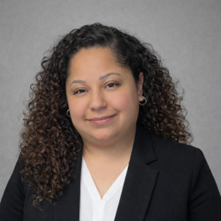
zulma

Zulma Galdamez

Senior Family Leader

Zulma is engaged in work that supports family-centered care and strengthens connections between parents, caregivers, and the systems that serve them. Her involvement in this work is driven by a commitment to learning, collaboration, and uplifting family voices. Zulma approaches this work with intention, care, and a belief in the power of early support to promote healthier outcomes for children and families. Zulma enjoys learning new things and applying them in meaningful ways and can be reached at [email protected].
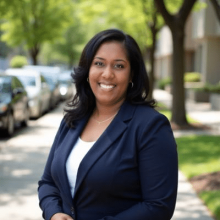
Danielle Little Headshot 2025

Danielle Little, M.Ed.

Executive Director, THRIVE Family Health & Education Center

Danielle brings a community-driven approach to THRIVE that blends executive leadership, maternal and child health expertise, and systems-level strategy to strengthen supports for families. Danielle is also engaged in advancing family-centered pediatric care with the Pediatrics Supporting Parents initiative in partnership with Durham Children’s Initiative. With over a decade as a doula, educator, and lactation counselor, she is deeply committed to whole-family health. Outside of work, Danielle is energized by laughter with friends and grounded by quiet mornings with coffee and journaling. Danielle can be reached at [email protected]

Nikki P Head Shot

Nikki Palmieri

Family Leader, PSP Initiative

Nikki is a parent leader advancing family-centered care through the Pediatrics Supporting Parents initiative. As a mother raising a multicultural family, her commitment is rooted in lived experience, including navigating early parenthood during isolation and later finding strength through community and support. Nikki is passionate about ensuring parents feel safe asking for help and being honest about struggles, and confident as their child’s secure base. She believes no parent should feel alone and that support matters. Nikki loves books and farm life with her family and baby goats and can be reached at [email protected].
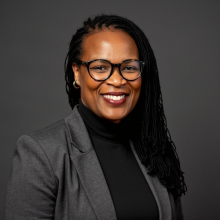
Tiffany headshot

Tiffany Solomon

Program Manager, PSP Initiative

Tiffany is a parent leader, advocate, and systems-change practitioner whose work is rooted in lived experience. She came to Pediatrics Supporting Parents as the parent of a child with disabilities after navigating a fragmented health care system during medical crisis and homelessness. Through PSP, Tiffany grew as a caregiver, consultant, and leader advancing early relational health. She helps shape family-centered programs, research, and training that elevate parent voice. She currently serves in leadership roles across initiatives focused on family engagement and equity. Outside work, she loves dancing, giraffes, and all things peach.

Contact

To connect with the THRIVE team in Durham, please visit their website or email Danielle Little ([email protected]).